

Introduction: The Growing Problem of Screen Time
In today’s digital world, smartphones have become an essential part of everyday life. From online classes and homework to social media and gaming, students rely heavily on their devices. While technology brings many benefits, there’s a growing concern that excessive use is leading to smartphone addiction in students.
Many parents and teachers notice changes in behavior but struggle to identify whether it’s just normal usage or something more serious. Is your child always glued to their phone? Do they get anxious without it? Are their grades slipping?
These could be early warning signs.
This blog will help you understand the signs of smartphone addiction in students, recognize phone addiction symptoms, and take practical steps to prevent long-term harm. Whether you’re a parent, teacher, or student, this guide will give you clarity and solutions.
What is Smartphone Addiction?
Smartphone addiction is a behavioral dependency where a person feels the constant need to use their phone, even when it negatively impacts their daily life.
It is not officially classified as a medical disorder in all cases, but it shares similarities with other addictions like:
- Loss of control
- Increased usage over time
- Withdrawal symptoms (anxiety, irritability)
- Neglect of responsibilities
For students, this addiction often revolves around:
- Social media scrolling
- Online gaming
- Messaging apps
- Video streaming
When usage becomes excessive and uncontrollable, it turns into a serious issue.
Why Students Are More Vulnerable
Students are especially at risk of developing teen screen addiction due to several factors:
1. Developing Brain
Young brains are still growing, especially the areas responsible for decision-making and self-control. This makes students more prone to impulsive behavior.
2. Social Pressure
Students feel the need to stay connected with friends online. Missing out on messages or updates can cause anxiety (FOMO – Fear of Missing Out).
3. Easy Access
Smartphones are always within reach, making it difficult to set boundaries.
4. Entertainment Overload
Apps are designed to be addictive, with endless content, notifications, and rewards.
5. Academic Dependency
Online learning tools blur the line between productive and recreational screen time.
Major Signs of Smartphone Addiction in Students
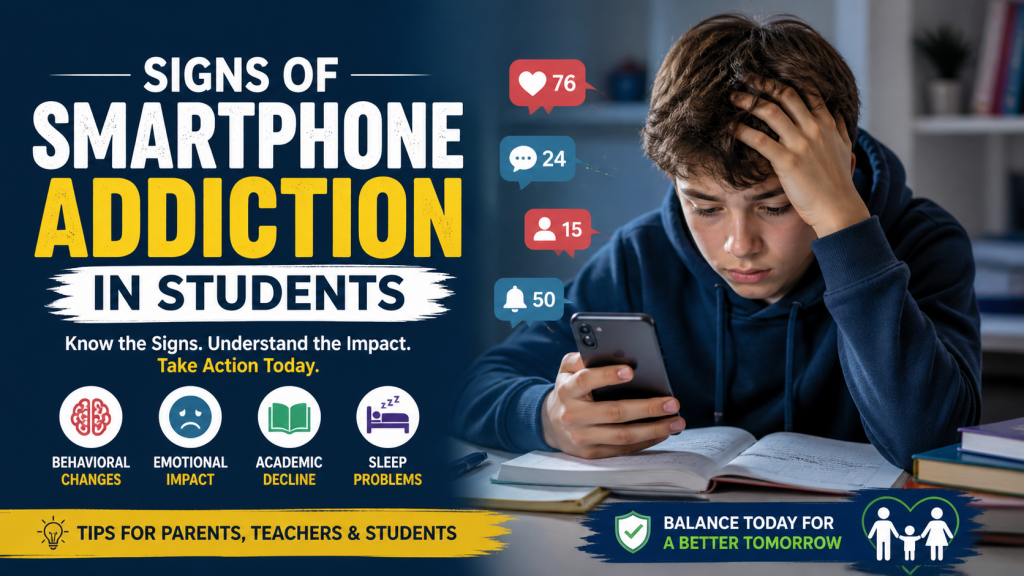
Recognizing early warning signs is key. These signs can be grouped into behavioral, emotional, and academic categories.
Behavioral Signs
Students often show noticeable changes in daily habits.
1. Constant Phone Checking
- Checking phone every few minutes
- Feeling the need to respond instantly
Example: A student checking their phone during dinner, homework, or even in the middle of a conversation.
2. Loss of Interest in Offline Activities
- Avoiding sports, hobbies, or outdoor play
- Preferring screen time over social interaction
3. Sleep Disruption
- Staying up late scrolling or gaming
- Using the phone immediately after waking up
4. Secretive Usage
- Hiding screen activity from parents
- Quickly switching apps when someone approaches
Emotional Signs
Addiction doesn’t just affect behavior—it impacts emotions too.
1. Anxiety Without Phone
- Feeling restless or panicked when the phone is not nearby
- Constantly worrying about notifications
2. Irritability
- Getting angry when asked to reduce screen time
- Mood swings linked to phone usage
3. Low Self-Esteem
- Comparing themselves to others on social media
- Seeking validation through likes and comments
Academic Impact
One of the most concerning effects of smartphone addiction in students is on education.
1. Declining Grades
- Poor concentration during study
- Procrastination due to screen distractions
2. Reduced Attention Span
- Difficulty focusing on tasks
- Easily distracted by notifications
3. Incomplete Assignments
- Delayed or rushed homework
- Lack of interest in schoolwork
Example: A student who used to perform well starts missing deadlines and shows a drop in performance.
Common Phone Addiction Symptoms (Detailed Breakdown)
Understanding phone addiction symptoms can help identify the problem early.
1. Phantom Notifications
Feeling vibrations or hearing notifications that don’t exist.
2. Screen Time Denial
Underestimating or lying about how much time is spent on the phone.
3. Multitasking Illusion
Believing they can study and use the phone at the same time—leading to poor productivity.
4. Dopamine Dependency
Repeated checking for notifications creates a reward loop in the brain.
5. Withdrawal Symptoms
- Boredom
- Anxiety
- Restlessness
6. Escalation of Usage
Gradually increasing screen time to feel satisfied.
Teen Screen Addiction: Long-Term Effects
If left unchecked, teen screen addiction can lead to serious long-term consequences.
1. Mental Health Issues
- Anxiety disorders
- Depression
- Social isolation
2. Physical Health Problems
- Eye strain
- Poor posture
- Lack of physical activity
3. Poor Social Skills
- Difficulty in face-to-face communication
- Reduced empathy
4. Sleep Disorders
Blue light exposure disrupts natural sleep cycles.
5. Reduced Academic and Career Growth
Poor focus and discipline can impact future opportunities.
Causes of Addiction in Students
Understanding the root causes helps in prevention.
1. App Design
Apps are built to keep users engaged for as long as possible.
2. Lack of Boundaries
No fixed rules for screen time at home.
3. Emotional Escape
Students use phones to avoid stress, boredom, or loneliness.
4. Peer Influence
Friends constantly interacting online creates pressure to stay active.
5. Pandemic Impact
Increased screen usage during online learning has carried forward.
Practical Solutions and Prevention Tips
The good news? Smartphone addiction is manageable with the right approach.
For Parents
1. Set Clear Rules
- Define screen time limits
- No phones during meals or bedtime
2. Be a Role Model
Children copy adults. Limit your own screen usage.
3. Create Tech-Free Zones
- Bedrooms
- Dining areas
4. Encourage Offline Activities
- Sports
- Đọc
- Family time
5. Use Parental Controls
Monitor and limit usage when necessary.
For Teachers
1. Educate Students
Teach about the risks of excessive screen time.
2. Encourage Participation
Promote classroom discussions and group activities.
3. Set Digital Boundaries
Limit phone use during class.
For Students
1. Track Your Screen Time
Awareness is the first step.
2. Set Daily Limits
Use built-in tools to control usage.
3. Replace Habits
Instead of scrolling:
- Go for a walk
- Talk to friends offline
- Pick a hobby
4. Turn Off Notifications
Reduce distractions and anxiety.
Healthy Screen Habits
Developing healthy habits is essential for long-term balance.
1. Follow the 20-20-20 Rule
Every 20 minutes, look at something 20 feet away for 20 seconds.
2. Digital Detox Days
Take one day a week with minimal phone use.
3. Prioritize Real-Life Connections
Spend more time with family and friends.
4. Use Technology Mindfully
Ask: “Why am I using my phone right now?”
When to Seek Professional Help
Sometimes, self-control and family efforts may not be enough.
Seek help if:
- The student becomes aggressive when the phone is removed
- Severe anxiety or depression appears
- Academic performance drops significantly
- Social withdrawal becomes extreme
Professionals who can help include:
- Psychologists
- School counselors
- Behavioral therapists
FAQs
1. What are the first signs of smartphone addiction in students?
Early signs include constant phone checking, reduced interest in activities, and irritability without the phone.
2. How much screen time is too much for students?
Generally, more than 2–3 hours of non-academic screen time daily may be excessive.
3. Can smartphone addiction affect mental health?
Yes, it can lead to anxiety, depression, and low self-esteem.
4. How can parents control phone usage without conflict?
Set clear rules, communicate openly, and lead by example rather than forcing restrictions.
5. Are educational apps also addictive?
Yes, even educational tools can become addictive if used excessively.
6. How long does it take to reduce phone addiction?
It varies, but consistent habits can show improvement within a few weeks.
7. Is smartphone addiction reversible?
Yes, with awareness, discipline, and support, it can be managed effectively.
Conclusion: Take Action Before It’s Too Late
Smartphones are powerful tools—but without control, they can become harmful. Recognizing the signs of smartphone addiction in students early can prevent long-term damage.
If you notice phone addiction symptoms or patterns of teen screen addiction, don’t ignore them. Small changes today can make a big difference tomorrow.
Your Next Step:
- Observe behavior
- Start conversations
- Set healthy boundaries
Remember: It’s not about removing technology—it’s about using it wisely.
Explore Zeeko’s Home Page to discover our mission on the Về Us Page, innovative Phone Blocking System, and engaging Phoenix Quest 10 programme. We provide Hội thảo An toàn Internet, the Zeeko Report Card, and the Thủ lĩnh phép thuật Choose Country initiative, alongside insights from our Báo cáo xu hướng kỹ thuật số. Stay connected with us on Facebook and Instagram for updates.