

Quick Answer: What Is Internet Safety Training Ireland?
Internet safety training Ireland refers to structured educational programmes that teach students, teachers, school leaders, and parents how to use digital technologies safely, responsibly, and ethically. These programmes cover cyberbullying prevention, online privacy, social media safety, digital citizenship, phishing awareness, online grooming risks, and digital wellbeing, helping schools create safer online learning environments while supporting safeguarding responsibilities.
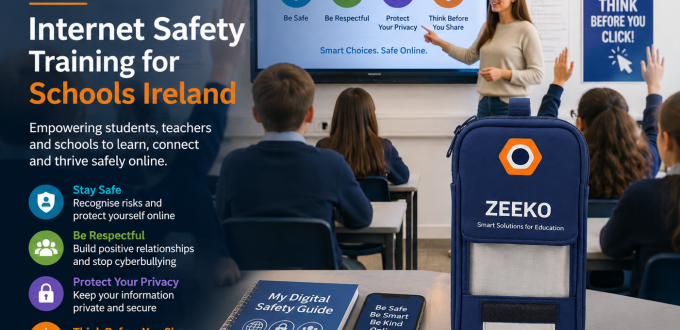
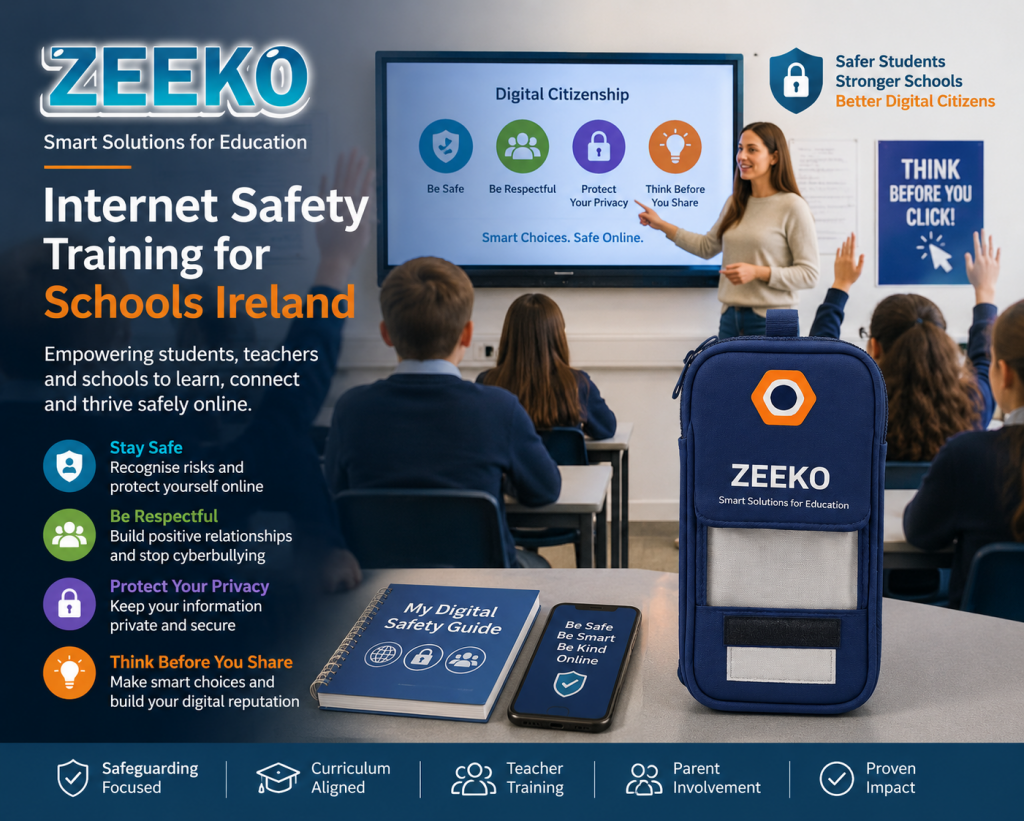
Internet Safety Training for Schools Ireland
Introduction
A student receives a message from an unknown online contact. Another shares personal information on social media without understanding the consequences. Meanwhile, AI-generated content and deepfakes make it increasingly difficult for young people to distinguish truth from manipulation.
These situations are no longer rare. They are everyday realities in modern education.
As digital technology becomes deeply embedded in teaching and learning, internet safety training Ireland has become an essential part of school safeguarding and student wellbeing. Irish schools are expected to help students navigate online environments safely while developing the digital skills needed for the future.
Rather than responding only after online incidents occur, schools are increasingly adopting proactive approaches through structured internet safety education Ireland, digital citizenship programmes, and online safety awareness initiatives.
This guide explains why internet safety training matters, the risks students face, and how schools can implement effective programmes that protect and empower their communities.
Key Takeaways
- Internet safety is now a core safeguarding responsibility for schools.
- Students face risks including cyberbullying, phishing, scams, grooming, and misinformation.
- Digital citizenship helps young people become responsible online users.
- Teachers require ongoing online safety training to address emerging risks.
- Parents play a critical role in reinforcing safe online behaviour.
- Cyber safety education supports student wellbeing and resilience.
- Regular training can reduce online incidents and improve reporting.
- AI-generated content and deepfakes are emerging challenges for schools.
- Whole-school approaches are more effective than one-off awareness sessions.
- Proactive internet safety training creates safer and more positive learning environments.
What Is Internet Safety Training?
Internet safety training is a structured educational programme designed to teach individuals how to use online technologies safely, responsibly, and ethically.
For schools, training typically includes:
- Cyberbullying prevention
- Social media safety
- Data privacy awareness
- GDPR compliance principles
- Digital citizenship
- Online reputation management
- Screen time management
- Online scams and phishing awareness
- Media literacy
- AI and deepfake awareness
A comprehensive school internet safety programme helps students understand risks while developing the knowledge and confidence needed to make informed online decisions.
Why Internet Safety Training Is Essential for Irish Schools
Technology is now integrated into almost every aspect of education. Students access online learning platforms, collaborate digitally, communicate through messaging apps, and engage with social media daily.
Without appropriate guidance, these opportunities can expose young people to significant risks.
Effective internet safety for schools Ireland programmes help schools:
- Meet safeguarding obligations
- Promote responsible technology use
- Support student wellbeing
- Reduce cyberbullying incidents
- Improve digital literacy
- Build resilience against online manipulation
- Foster positive school culture
Most importantly, internet safety training empowers students to become active participants in protecting themselves and others online.
The Biggest Online Risks Facing Students Today
Cyberbullying
Cyberbullying occurs through social media, messaging apps, gaming platforms, and online communities. Unlike traditional bullying, it can follow students beyond school hours and reach wider audiences instantly.
Online Predators and Grooming
Online grooming involves building trust with young people for exploitative purposes. Students may encounter risks through gaming platforms, social media, and private messaging applications.
Social Media Misuse
Oversharing personal information, engaging in harmful trends, and exposure to inappropriate content can negatively impact safety, wellbeing, and reputation.
Privacy Breaches
Many young people unknowingly share personal information that can expose them to identity theft, scams, or reputational harm.
Phishing Scams
Students increasingly receive fraudulent emails, messages, and links designed to steal passwords or personal information.
Misinformation and Media Manipulation
The rapid spread of false information makes media literacy a critical skill. Students need tools to evaluate online content critically.
Deepfakes and AI Risks
Artificial intelligence can generate realistic but misleading images, videos, and audio recordings. Schools must prepare students to recognise manipulated content and understand its implications.
What Should an Effective Internet Safety Training Programme Include?
| Topic | Why It Matters | Intended Audience |
| Digital Citizenship | Encourages responsible online behaviour | Students |
| Cyberbullying Prevention | Reduces harmful online interactions | Students, Staff |
| Social Media Safety | Protects privacy and wellbeing | Students, Parents |
| Data Privacy & GDPR | Promotes responsible data use | Staff, Students |
| Online Grooming Awareness | Supports safeguarding | Students, Staff |
| Phishing & Online Scams | Prevents cybercrime risks | Students, Staff |
| Digital Wellbeing | Encourages healthy technology use | Students |
| Media Literacy | Helps identify misinformation | Students, Staff |
| AI & Deepfake Awareness | Addresses emerging threats | Students, Staff |
| Parent Awareness Sessions | Strengthens home-school partnerships | Parents |
Internet Safety Training for Students
Students are at the centre of every internet safety strategy.
Effective cyber safety training for students should focus on practical, age-appropriate learning experiences that help young people:
- Recognise online risks
- Protect personal information
- Respond to cyberbullying
- Evaluate online content
- Manage screen time
- Build positive digital footprints
- Report concerns confidently
Interactive workshops, scenario-based learning, and real-world examples often produce stronger engagement than lecture-style presentations.
Internet Safety Training for Teachers and School Staff
Teachers play a critical role in identifying and responding to online safety concerns.
Comprehensive online safety training for teachers should include:
- Current online trends
- Safeguarding responsibilities
- Recognising cyberbullying indicators
- Responding to online incidents
- Data protection responsibilities
- AI and emerging technology risks
- Digital wellbeing support strategies
Regular professional development ensures staff remain informed about rapidly changing online environments.
The Role of Parents in Online Safety Education
Schools cannot address internet safety alone.
Parents influence children's digital habits more than any other group. Effective programmes therefore include parent engagement and awareness initiatives.
Parents can support online safety by:
- Discussing online experiences openly
- Setting technology boundaries
- Monitoring age-appropriate usage
- Encouraging responsible social media behaviour
- Reporting concerns promptly
- Modelling positive digital habits
Schools that involve families often achieve stronger online safety outcomes.
Benefits of Internet Safety Training for Schools
Better Safeguarding
Training strengthens safeguarding frameworks by helping staff and students identify risks early.
Improved Digital Wellbeing
Students learn healthier relationships with technology and develop stronger emotional resilience.
Reduced Online Incidents
Education helps prevent cyberbullying, scams, privacy breaches, and unsafe online behaviour.
Stronger School Culture
Shared expectations promote respectful and responsible digital conduct.
Increased Parent Confidence
Families gain reassurance that the school is actively protecting students online.
Enhanced Digital Citizenship
Students develop ethical, respectful, and responsible online behaviours that support lifelong learning.
How Schools in Ireland Can Implement an Effective Internet Safety Strategy
Step 1: Assess Current Risks
Review student behaviours, technology usage, and existing safeguarding procedures.
Step 2: Establish Clear Policies
Develop clear acceptable-use policies and digital behaviour expectations.
Step 3: Deliver Student Training
Provide regular age-appropriate internet safety education throughout the school year.
Step 4: Train Staff
Ensure teachers and school leaders receive ongoing professional development.
Step 5: Engage Parents
Offer information sessions, workshops, and guidance resources.
Step 6: Integrate Digital Citizenship
Embed digital citizenship into everyday teaching and learning activities.
Step 7: Monitor and Review
Regularly evaluate programme effectiveness and update content to reflect emerging risks.
Common Challenges Schools Face
Many schools encounter obstacles when implementing internet safety initiatives:
- Limited staff time
- Budget constraints
- Rapid technological change
- Inconsistent parent engagement
- Student resistance
- Emerging social media platforms
- Increasing AI-generated risks
Addressing these challenges requires leadership commitment and a whole-school approach.
Future Trends in Internet Safety Education
Artificial Intelligence
AI tools are transforming how students access information and create content.
Deepfakes
Realistic synthetic media presents new challenges for trust, reputation, and misinformation.
Emerging Social Platforms
New apps and communication channels require continuous monitoring and education.
Digital Resilience
Future programmes will focus increasingly on helping students recover from online setbacks and challenges.
Media Literacy
Critical thinking skills will become even more important as misinformation becomes more sophisticated.
Frequently Asked Questions
What is internet safety training in Ireland?
Answer: Internet safety training in Ireland is a structured educational programme that teaches students, teachers, and parents how to stay safe online. It covers cyberbullying prevention, privacy protection, digital citizenship, social media safety, online scams, and responsible technology use while supporting school safeguarding objectives.
Why do schools need internet safety training?
Answer: Schools need internet safety training because students spend significant time online for learning and social interaction. Training helps reduce online risks, supports safeguarding responsibilities, promotes digital wellbeing, and prepares students to navigate digital environments responsibly.
What are the biggest online risks facing students today?
Answer: Key risks include cyberbullying, online grooming, phishing scams, privacy breaches, misinformation, harmful social media use, deepfakes, AI-generated content, and online fraud. Awareness and education help students recognise and respond appropriately to these threats.
How often should schools provide internet safety training?
Answer: Schools should provide internet safety training throughout the year rather than relying on annual events. Ongoing education, refresher sessions, staff development, and parent engagement activities ensure safety knowledge remains current and effective.
What topics should be included in internet safety education?
Answer: Essential topics include digital citizenship, cyberbullying prevention, online privacy, social media safety, phishing awareness, online scams, media literacy, screen time management, digital wellbeing, AI risks, and online reputation management.
Can internet safety training reduce cyberbullying?
Answer: Yes. Effective training increases awareness, promotes empathy, encourages reporting, and teaches responsible online behaviour. Schools that implement comprehensive cyberbullying prevention programmes often experience improved online conduct and stronger student support systems.
Who should receive internet safety training in schools?
Answer: Internet safety training should involve students, teachers, school leaders, support staff, and parents. A whole-school approach creates consistent expectations and strengthens online safeguarding across the entire educational community.
What is digital citizenship education?
Answer: Digital citizenship education teaches individuals how to participate responsibly, ethically, and safely in digital environments. It includes online behaviour, respect, privacy, communication, critical thinking, and responsible technology use.
How can schools create a safer online environment?
Answer: Schools can create safer online environments through clear policies, regular training, staff development, parent engagement, digital citizenship education, effective safeguarding procedures, and ongoing monitoring of emerging online risks.
What are the benefits of internet safety workshops for students?
Answer: Internet safety workshops improve awareness, digital resilience, critical thinking, privacy protection, cyberbullying prevention, and responsible online behaviour. They also help students build confidence in managing online challenges safely.
Conclusion
The digital world offers extraordinary educational opportunities, but it also introduces new safeguarding challenges that schools cannot ignore.
Implementing comprehensive internet safety training Ireland programmes enables schools to move beyond reactive responses and adopt a proactive approach to online safety. By combining digital citizenship education, teacher development, parent engagement, and student-focused learning, schools can create safer, healthier, and more resilient digital communities.
As online risks continue to evolve, investing in high-quality internet safety for schools Ireland initiatives is not simply a compliance requirement—it is an essential part of preparing young people for life in an increasingly connected world.
Schools that act today will be better equipped to protect, empower, and educate tomorrow's digital citizens.
Explore Zeeko’s Home Page to discover our mission on the About Us Page, innovative Phone Blocking System, and engaging Phoenix Quest 10 programme. We provide Internet Safety Seminars, the Zeeko Report Card, and the Magical Leaders Choose Country initiative, alongside insights from our Digital Trend Report. Stay connected with us on Facebook and Instagram for updates.