

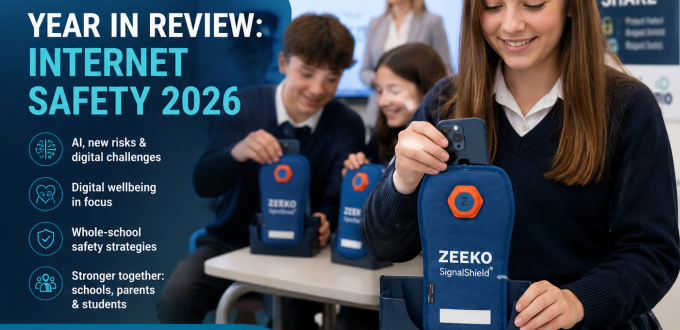

Internet safety evolved rapidly throughout 2026. Artificial intelligence became part of everyday learning, smartphones remained central to students' social lives, and schools faced increasingly sophisticated online risks. From AI-generated misinformation and deepfakes to cyberbullying and excessive screen time, educators across Ireland recognised that protecting children online now requires more than filtering websites or enforcing device policies.
This zeeko internet safety review examines the most significant developments that shaped digital safety for schools during 2026. Drawing on educational research, Irish policy developments, and global internet safety trends, it highlights how schools strengthened digital wellbeing, promoted responsible technology use, and prepared students for an increasingly AI-driven world.
While technology continues to transform education, one lesson became unmistakably clear throughout 2026: building digitally resilient students requires ongoing education, strong partnerships with parents, and a whole-school approach to online safety education.
Quick Answer – What is Zeeko's Internet Safety Review for 2026?
The Zeeko Internet Safety Review 2026 highlights the year's most important internet safety developments affecting schools, including AI-powered risks, cyberbullying prevention, digital wellbeing, phone-free learning initiatives, and practical strategies that helped educators create safer and healthier digital environments for students.
Why Internet Safety Became More Important Than Ever in 2026
Several major developments reshaped the online world during the year.
The widespread adoption of generative AI dramatically changed how young people searched for information, completed homework, interacted online, and created digital content. While AI introduced exciting educational opportunities, it also created new risks surrounding misinformation, plagiarism, manipulated media, privacy, and online scams.
At the same time, smartphone ownership among teenagers continued to rise, while younger children gained earlier access to connected devices through gaming, tablets, and wearable technology.
Schools increasingly reported concerns including:
- AI-generated misinformation
- Deepfake images and videos
- Online scams targeting students
- Cyberbullying through anonymous platforms
- Gaming-related harassment
- Digital addiction
- Privacy and data protection concerns
- Reduced classroom concentration
- Emotional wellbeing linked to excessive screen time
These developments reinforced the importance of internet safety Ireland, school internet safety, and comprehensive digital safety for schools programmes that focus on both technology and human behaviour.
The Digital Safety Landscape in 2026
Answer Box
What were the biggest online safety challenges in 2026?
The biggest challenges included AI-generated scams, deepfakes, cyberbullying, excessive screen time, online misinformation, privacy concerns, phishing attacks, gaming risks, and the growing need for digital wellbeing education in schools.
The digital landscape became significantly more complex during 2026. Online risks evolved faster than traditional safety education programmes, making continuous learning essential for schools, families, and students.
Rather than focusing solely on blocking harmful content, educators increasingly shifted toward building critical thinking, digital resilience, responsible online behaviour, and AI literacy.
AI-Powered Online Threats
Artificial intelligence became both an educational opportunity and a cyber safety challenge.
Students increasingly used AI assistants for:
- Homework support
- Research
- Writing
- Coding
- Language learning
- Creative projects
However, AI also enabled new forms of abuse.
Schools reported growing concerns about:
- AI-generated fake images
- Deepfake videos
- Voice cloning
- Automated phishing emails
- AI-assisted cheating
- Misinformation campaigns
Teaching students how to verify online information became as important as teaching traditional digital skills.
Expert Insight
AI literacy is now a core element of internet safety education.
Students need to understand not only how to use AI responsibly but also how to recognise manipulated content, verify information sources, and question what they see online.
Cyberbullying Continued to Evolve
Cyberbullying remained one of the most significant concerns for educators.
Unlike traditional bullying, online harassment follows students beyond school hours, often occurring across multiple platforms simultaneously.
Common incidents included:
- Anonymous messaging
- Group exclusion
- Fake profiles
- Edited images
- Viral rumours
- Gaming harassment
- Social media shaming
Schools increasingly recognised that prevention requires education rather than punishment alone.
Digital citizenship programmes encouraged empathy, respectful communication, and responsible online behaviour.
Privacy Became a Daily Conversation
Children are sharing more personal information online than ever before.
From gaming accounts and educational apps to AI chatbots and social media platforms, students interact with dozens of digital services each week.
Schools placed greater emphasis on:
- Password security
- Two-factor authentication
- Data privacy
- Consent before sharing images
- Location sharing awareness
- Digital footprints
- Responsible account management
These practical skills are now fundamental components of cyber safety education.
Screen Time and Digital Wellbeing
Perhaps no topic generated more discussion during 2026 than screen time.
Many schools observed that excessive recreational device use affected:
- Classroom engagement
- Sleep quality
- Attention span
- Emotional wellbeing
- Physical activity
- Social interaction
Rather than promoting complete technology bans, educators increasingly focused on balanced technology use and healthy digital habits.
This broader focus helped establish digital wellbeing as a central pillar of modern education.
Expert Tip for Teachers
✔ Encourage regular device-free classroom discussions.
✔ Model responsible technology use.
✔ Include media literacy in everyday lessons.
✔ Teach students how algorithms influence online experiences.
✔ Discuss AI-generated content openly.
Online Gaming Safety
Gaming remained one of the most popular online activities among children and teenagers.
While gaming offers creativity, collaboration, and problem-solving opportunities, schools also highlighted risks including:
- Toxic behaviour
- Online grooming
- In-game purchases
- Gambling-style mechanics
- Voice chat abuse
- Data collection
- Excessive gaming time
Parents increasingly sought guidance on establishing healthy gaming boundaries without eliminating positive experiences.
Misinformation and Critical Thinking
The rapid spread of AI-generated content made misinformation more convincing than ever.
Students increasingly encountered:
- Fake news
- Edited images
- Manipulated videos
- AI-written articles
- False health advice
- Political misinformation
Schools responded by strengthening media literacy programmes that encouraged students to ask:
- Who created this?
- Why was it created?
- Is the source trustworthy?
- Can the information be verified?
- Does another reliable source confirm it?
These questions became essential life skills.
Internet Safety by the Numbers
| Trend | 2026 Observation |
| AI Use in Education | Rapid adoption across schools and universities |
| Cyberbullying | Continued concern affecting student wellbeing |
| Smartphone Ownership | Increasing among younger students |
| Digital Wellbeing | Became a strategic school priority |
| Parent Engagement | Higher participation in online safety sessions |
| Phone-Free Learning | More schools adopted structured policies |
| Teacher CPD | Growing demand for AI and internet safety training |
Research Snapshot
Recent findings from organisations such as Webwise Ireland, EU Kids Online, UNESCO, OECD, Internet Matters, Common Sense Media, and Ofcom consistently indicate several global trends:
- Children are accessing connected devices at younger ages.
- AI tools are becoming part of everyday learning.
- Cyberbullying remains a significant wellbeing concern.
- Parents increasingly seek practical guidance on online safety.
- Schools are expanding digital citizenship and media literacy education.
- Digital wellbeing is emerging as a strategic educational priority rather than a standalone initiative.
These trends reinforce the importance of comprehensive internet safety programmes that combine education, policy, teacher training, and family engagement.
Major Internet Safety Trends That Defined 2026
Answer Box
What were the most important internet safety trends in 2026?
The defining trends included responsible AI use, digital citizenship, phone-free school initiatives, increased parent education, stronger cyber resilience, enhanced privacy awareness, digital wellbeing programmes, and greater collaboration between schools and families.
The events of 2026 demonstrated that effective internet safety extends beyond technology. Schools increasingly adopted holistic strategies that combined education, wellbeing, policy, and community engagement.
1. Responsible AI Became Essential
Artificial intelligence moved from an emerging technology to an everyday classroom tool.
Forward-thinking schools began developing clear guidance on:
- Ethical AI use
- Academic integrity
- Fact-checking AI responses
- Protecting personal information
- Critical thinking
- Human oversight
Responsible AI education is likely to become a permanent part of digital citizenship curricula.
2. Digital Wellbeing Took Centre Stage
Schools increasingly recognised that student success depends on both academic achievement and healthy digital habits.
Digital wellbeing programmes focused on:
- Mindful technology use
- Healthy screen habits
- Online relationships
- Mental health
- Sleep awareness
- Device balance
- Emotional resilience
Rather than asking, "How much technology should students use?", schools began asking, "How can students use technology well?"
Expert Tip for Parents
- Have regular conversations about online experiences.
- Create device-free family times.
- Encourage balanced screen use.
- Explore apps and games together.
- Model positive digital habits at home.
3. Phone-Free Learning Gained Momentum
More schools introduced structured approaches to reduce classroom distractions.
Instead of relying solely on disciplinary measures, many schools adopted systems that:
- Reduced unnecessary phone use during lessons.
- Improved student engagement.
- Encouraged face-to-face interaction.
- Supported teacher wellbeing.
- Created calmer learning environments.
Phone-free learning increasingly became part of broader digital wellbeing initiatives, rather than simply a behaviour management strategy.
4. Parent Education Expanded
Schools recognised that internet safety cannot stop at the school gate.
Parent workshops increasingly covered:
- Social media safety
- Gaming risks
- AI tools
- Privacy settings
- Cyberbullying prevention
- Family digital agreements
- Healthy technology routines
This strengthened home-school partnerships and created more consistent online safety expectations for children.
5. Cyber Resilience Replaced Fear-Based Messaging
Instead of focusing only on online dangers, educators increasingly taught students how to respond confidently and responsibly when challenges arise.
Key areas included:
- Recognising online risks.
- Reporting concerns.
- Verifying information.
- Protecting personal data.
- Supporting peers.
- Recovering from mistakes.
- Building positive digital identities.
This resilience-focused approach empowers students to navigate the digital world safely rather than avoiding it altogether.
Comparison: Internet Safety in 2025 vs 2026
| Area | 2025 | 2026 |
| AI in Education | Emerging classroom tool | Widely adopted with responsible-use policies |
| Screen Time | Major concern | Managed through digital wellbeing strategies |
| Online Risks | Social media and cyberbullying | AI scams, deepfakes, misinformation, cyberbullying |
| School Response | Reactive policies | Whole-school proactive digital safety frameworks |
| Parent Engagement | Growing awareness | Strong partnerships through workshops and resources |
| Teacher Training | Focus on online safety basics | Expanded to AI literacy, digital citizenship and wellbeing |
| Device Management | Classroom rules | Structured phone-free learning initiatives |
Timeline: Major Internet Safety Events of 2026
| Period | Key Development |
| January–March | Schools expanded AI guidance and reviewed acceptable use policies. |
| April–June | Greater emphasis on digital wellbeing and student mental health initiatives. |
| July–August | Teacher CPD increasingly included AI literacy, cyber resilience and online safety planning. |
| September–October | Many schools strengthened phone-free classroom approaches and refreshed internet safety programmes for the new academic year. |
| November–December | Schools evaluated digital wellbeing outcomes and planned more comprehensive internet safety strategies for 2027. |
How Zeeko Helped Schools Improve Internet Safety
Answer Box – What role does Zeeko play in digital safety education?
Through its evidence-informed programmes, Zeeko supports schools with student workshops, teacher CPD, parent talks, digital wellbeing resources, and practical solutions that help schools build a whole-school approach to online safety, responsible technology use, and digital citizenship.
By 2026, many schools had moved beyond treating internet safety as a once-a-year awareness event. Instead, they adopted a continuous, whole-school strategy that involved students, teachers, parents, and school leaders.
This is where Zeeko's approach stood out.
Rather than focusing on fear-based messaging, Zeeko encourages schools to develop lifelong digital skills that help children use technology safely, responsibly, and confidently.
A comprehensive digital wellbeing strategy typically includes education, prevention, policy, and community engagement working together—not as separate initiatives, but as one connected framework.
A Whole-School Approach to Digital Safety
Effective digital safety for schools extends beyond the ICT classroom.
Schools that made the greatest progress in 2026 integrated internet safety into:
- Classroom teaching
- School policies
- Teacher professional development
- Student wellbeing programmes
- Parent engagement
- Digital citizenship education
- Device management strategies
- Online safeguarding procedures
This holistic approach helps create a consistent culture where responsible technology use becomes part of everyday school life.
Internet Safety Workshops for Students
Interactive workshops remained one of the most effective ways to help students understand online risks.
Instead of relying on lectures, successful programmes encouraged discussion, problem-solving, and critical thinking around real-world scenarios.
Topics commonly explored included:
- Safe social media use
- Digital footprints
- Online privacy
- AI and online safety
- Cyberbullying prevention
- Gaming safety
- Online scams
- Respectful online communication
- Misinformation and fact-checking
Students were encouraged to think critically about their online decisions rather than simply memorising rules.
Benefits for Schools
- Greater student engagement
- Improved awareness of online risks
- Increased confidence in reporting concerns
- Better digital decision-making
- Stronger peer support
Parent Talks Strengthened Online Safety at Home
Children's digital lives do not end when the school day finishes.
Recognising this, many schools increased opportunities for parents to learn about emerging technologies and online risks.
Parent sessions commonly addressed:
- Age-appropriate device use
- Social media trends
- AI tools used by children
- Cyberbullying warning signs
- Gaming platforms
- Privacy settings
- Family digital agreements
- Healthy screen habits
When schools and families communicate consistently, children receive clearer and more effective messages about responsible online behaviour.
Expert Tip for Parents
Focus on conversations, not surveillance.
Children are more likely to seek help when they feel supported rather than monitored. Regular discussions about online experiences build trust and encourage early reporting of problems.
Teacher CPD Became More Important Than Ever
Technology changes quickly, and teachers need ongoing support to stay informed.
Professional learning in 2026 increasingly covered:
- AI literacy
- Digital citizenship
- Cyber resilience
- Privacy and safeguarding
- Online behaviour trends
- Classroom technology management
- Media literacy
- Responding to cyberbullying
Continuous Professional Development (CPD) helped teachers feel more confident discussing complex digital issues with students and parents.
Digital Wellbeing Programmes
One of the most significant developments during 2026 was the growing emphasis on digital wellbeing.
Rather than viewing technology as inherently good or bad, schools encouraged students to develop healthy relationships with digital devices.
Typical programme themes included:
- Mindful technology use
- Emotional wellbeing
- Healthy screen routines
- Sleep awareness
- Offline relationships
- Digital balance
- Self-regulation
- Positive online behaviour
These discussions helped students reflect on how technology influences learning, friendships, and mental health.
Supporting Focus Through Phone Pouch Solutions
Another notable trend during 2026 was the adoption of structured phone management systems to minimise classroom distractions.
Rather than relying solely on confiscation or punitive measures, many schools explored secure phone storage or locking pouch solutions as part of broader digital wellbeing strategies.
Potential benefits reported by schools include:
- Improved classroom attention
- Fewer interruptions during lessons
- Increased face-to-face interaction
- Reduced anxiety linked to constant notifications
- More meaningful classroom discussions
- Better consistency in school-wide phone policies
Importantly, phone management works best when combined with education about responsible technology use—not as a standalone solution.
Online Safety Resources for Schools
Schools increasingly looked for practical resources that could be used throughout the academic year.
Effective resource libraries often include:
- Lesson plans
- Discussion activities
- Parent guides
- Teacher toolkits
- Digital citizenship resources
- AI guidance
- Classroom posters
- Policy templates
- Internet safety awareness campaigns
Having accessible resources enables schools to reinforce key messages regularly instead of limiting online safety to annual events.
Measurable Benefits of a Whole-School Strategy
While every school is unique, education research consistently suggests that comprehensive digital safety programmes can contribute to:
| Area | Potential Outcome |
| Student Awareness | Better recognition of online risks |
| Classroom Learning | Improved focus and participation |
| Teacher Confidence | Greater confidence discussing digital issues |
| Parent Engagement | Stronger home-school collaboration |
| Student Wellbeing | Healthier digital habits |
| Reporting Culture | Increased willingness to seek help |
| School Climate | More respectful online behaviour |
The Biggest Lessons Schools Learned in 2026
Answer Box – What lessons did educators learn in 2026?
Schools learned that technology policies alone are not enough. Long-term success depends on digital citizenship, AI literacy, parent engagement, teacher training, student voice, and a whole-school commitment to digital wellbeing.
The past year reinforced several important lessons for education leaders.
1. Technology Alone Cannot Solve Digital Safety
Filtering software and monitoring systems remain valuable, but they cannot replace education.
Students still need to learn:
- Critical thinking
- Ethical decision-making
- Responsible communication
- Privacy awareness
- Digital resilience
Technology should support education—not replace it.
2. Digital Citizenship Must Start Early
Children are accessing digital devices at increasingly younger ages.
Age-appropriate education about kindness, privacy, respectful communication, and responsible technology use should begin in primary school and continue throughout secondary education.
Building these habits early helps students make safer choices as online environments become more complex.
3. AI Literacy Is Becoming Essential
Artificial intelligence is now part of students' everyday experiences.
Schools increasingly recognised the importance of teaching learners how to:
- Use AI responsibly
- Verify AI-generated information
- Identify bias
- Protect personal data
- Understand ethical implications
AI literacy is rapidly becoming as important as traditional digital literacy.
4. Parents Are Essential Partners
Successful internet safety initiatives extend beyond school.
Schools that actively engaged parents often found greater consistency between expectations at home and at school.
Strong partnerships help reinforce:
- Healthy screen routines
- Online behaviour expectations
- Reporting concerns
- Responsible device use
Expert Tip for School Leaders
Develop an annual digital wellbeing strategy rather than relying on one-off awareness days.
Include measurable objectives, regular staff training, parent engagement, student voice, and ongoing evaluation.
5. Student Voice Matters
Many schools found that students themselves provided valuable insights into emerging digital trends.
Student councils, digital ambassador programmes, and peer mentoring initiatives helped schools better understand:
- Popular apps
- Online challenges
- Gaming communities
- AI tools
- Social media behaviours
Listening to students improved the relevance of internet safety education.
6. Wellbeing and Learning Are Closely Connected
Excessive screen time, poor sleep, online conflict, and digital overload can all influence learning outcomes.
Schools increasingly recognised that supporting student wellbeing also supports academic success.
Digital wellbeing is therefore becoming an educational priority rather than simply a safeguarding issue.
Internet Safety Success Stories
Answer Box – How did schools improve digital wellbeing during 2026?
Schools improved digital wellbeing by combining student education, teacher training, parent engagement, digital citizenship, structured phone policies, and ongoing internet safety programmes that promoted healthy technology use.
The following examples illustrate how a whole-school approach can positively influence school culture. These are representative scenarios based on common practices rather than individual case studies.
Success Story 1: Improving Classroom Focus
A post-primary school introduced:
- Teacher training
- Student digital wellbeing workshops
- Consistent classroom phone management
- Parent information evenings
Outcomes
- Fewer lesson interruptions
- Increased classroom participation
- Better student engagement
- More collaborative learning
Teachers reported that students adapted quickly once expectations became consistent across all year groups.
Success Story 2: Reducing Cyberbullying
A school expanded its digital citizenship programme to include:
- Peer mentoring
- Anonymous reporting
- Classroom discussions
- Parent education
- Online empathy activities
Outcomes
- Earlier reporting of incidents
- Improved student confidence
- More respectful online communication
- Greater awareness of responsible social media use
The emphasis shifted from reacting to incidents toward preventing them.
Success Story 3: Stronger Parent Engagement
Following a series of online safety workshops, one school introduced:
- Monthly digital newsletters
- Family discussion guides
- Parent webinars
- AI awareness sessions
Outcomes
- Higher attendance at school events
- Increased confidence among parents
- Better communication between home and school
- More consistent expectations around technology use
Success Story 4: Building AI Literacy
Teachers integrated AI discussions across several subjects.
Students explored:
- Fact-checking AI responses
- Ethical AI use
- Copyright
- Privacy
- Bias
- Academic integrity
Rather than banning AI tools, the school focused on helping students use them responsibly.
Challenges Schools Still Face
Answer Box – What challenges remain for schools?
Despite significant progress, schools continue to face challenges including AI misuse, increasing device dependency, teacher workload, evolving online risks, budget limitations, and the need for ongoing parent engagement and professional learning.
Although progress has been encouraging, internet safety remains a moving target.
AI Misuse
Schools continue to navigate issues such as:
- AI-assisted plagiarism
- Deepfake content
- False information
- Privacy concerns
- Ethical questions
Policies must evolve alongside technological developments.
Device Dependency
Many students remain heavily connected to smartphones and social media outside school hours.
This can affect:
- Sleep
- Concentration
- Emotional wellbeing
- Face-to-face communication
- Physical activity
Developing healthy digital habits remains an ongoing challenge.
Teacher Training Needs
Teachers cannot be expected to keep pace with rapidly changing technology without structured support.
Ongoing CPD remains essential for maintaining confidence and consistency.
Budget Constraints
Schools often need to balance internet safety priorities with other educational investments.
Cost-effective, scalable programmes that integrate with existing wellbeing initiatives are increasingly important.
Parent Awareness
Technology evolves faster than many families can keep up with.
Schools continue to play an important role in helping parents understand:
- Emerging apps
- AI developments
- Gaming trends
- Privacy settings
- Digital wellbeing strategies
Emerging Online Risks
Future challenges are likely to include:
- More sophisticated AI-generated scams
- Immersive virtual environments
- Wearable technology
- Expanded data collection
- Evolving social media platforms
- New forms of online manipulation
Preparing students for these risks requires continuous learning rather than one-time interventions.
Frequently Asked Questions
What is the Zeeko Internet Safety Review for 2026?
The Zeeko Internet Safety Review 2026 is a year-end overview of the most significant internet safety trends, digital wellbeing developments, AI-related challenges, and practical lessons that shaped schools throughout the year. It highlights evidence-informed strategies to help educators create safer digital learning environments.
Why is internet safety important in schools?
Internet safety helps students recognise online risks, protect their personal information, build healthy digital habits, and become responsible digital citizens. It also supports student wellbeing, safeguarding, and positive learning outcomes.
What were the biggest online risks during 2026?
Key risks included AI-generated misinformation, deepfakes, phishing scams, cyberbullying, privacy concerns, excessive screen time, online grooming, gaming-related risks, and increasingly sophisticated social engineering attacks.
How has AI changed online safety education?
AI has expanded both opportunities and challenges. Schools now need to teach students how to use AI ethically, evaluate AI-generated content critically, protect personal data, and understand bias, misinformation, and academic integrity.
What is digital wellbeing?
Digital wellbeing refers to using technology in ways that support learning, health, relationships, and overall wellbeing. It encourages balanced screen use, positive online interactions, mindful technology habits, and responsible digital behaviour.
Why are phone-free schools becoming more common?
Many schools are introducing structured phone management approaches to reduce distractions, improve classroom engagement, encourage face-to-face communication, and support healthier relationships with technology as part of broader digital wellbeing initiatives.
How can parents support internet safety?
Parents can support internet safety by having regular conversations about online experiences, modelling positive digital habits, setting age-appropriate boundaries, exploring technology together, and working closely with their child's school.
What internet safety programmes can schools implement?
Schools can adopt a combination of student workshops, teacher CPD, parent education, digital citizenship lessons, cyber safety education, AI literacy programmes, digital wellbeing initiatives, and whole-school internet safety strategies.
Conclusion
The zeeko internet safety review demonstrates that 2026 was a defining year for online safety education. Artificial intelligence accelerated innovation in classrooms, but it also introduced new challenges that required schools to rethink how they teach digital citizenship, cyber resilience, and responsible technology use.
The strongest lesson from the year is clear: internet safety cannot rely solely on technical controls or restrictive policies. Lasting impact comes from empowering students with the knowledge, confidence, and critical thinking skills needed to navigate an increasingly complex digital world.
Schools that embraced a whole-school approach—combining student education, teacher professional development, parent engagement, digital wellbeing, and responsible AI guidance—were better positioned to create safer, more inclusive, and more focused learning environments.
As we look ahead to 2027, digital wellbeing will continue to grow in importance, AI literacy will become an essential life skill, and collaboration between educators, families, and trusted education partners will remain the foundation of effective online safety education.
Explore Zeeko’s Home Page to discover our mission on the About Us Page, innovative Phone Blocking System, and engaging Phoenix Quest 10 programme. We provide Internet Safety Seminars, the Zeeko Report Card, and the Magical Leaders Choose Country initiative, alongside insights from our Digital Trend Report. Stay connected with us on Facebook and Instagram for updates.