

Technology is now part of almost every aspect of education. Students use laptops for assignments, tablets for learning activities, AI tools for research, and smartphones to stay connected. While technology has created exciting opportunities for teaching and learning, it has also introduced new challenges for schools.
Teachers are reporting shorter attention spans, parents are concerned about screen time, and school leaders are increasingly focused on student mental health and online safety. As a result, digital wellbeing tools for schools have become one of the most important educational investments in 2026.
These tools are designed to help schools create healthier relationships with technology by improving student focus, reducing distractions, supporting mental wellbeing, and encouraging responsible digital behaviour.
What Are Digital Wellbeing Tools for Schools?
Digital wellbeing tools for schools are technologies, programmes, and strategies that help students use digital devices safely, responsibly, and in moderation. They support healthy technology habits while promoting academic success, online safety, and emotional wellbeing.
Examples include phone management systems, digital citizenship platforms, internet safety training programmes, wellbeing monitoring tools, and parent engagement solutions.
The goal is not to remove technology from education but to ensure it enhances learning rather than becoming a distraction.
Looking to reduce classroom distractions and manage student phone usage effectively?
Explore Zeeko’s Phone Pouch Solution designed specifically for schools.
Why Are Digital Wellbeing Tools Important for Schools in 2026?
Students today are growing up in a world where they are connected almost constantly. Many young people spend hours each day interacting with smartphones, social media platforms, messaging apps, video content, and AI-powered tools.
While digital technologies offer valuable learning opportunities, excessive or unmanaged use can negatively affect concentration, sleep, mental health, and social development.
Schools are increasingly noticing challenges such as:
- Students becoming distracted by notifications during lessons
- Social media conflicts spilling into the classroom
- Increased anxiety linked to online interactions
- Difficulties maintaining attention during learning activities
- Cyberbullying and online safety concerns
Digital wellbeing is no longer simply a technology issue. It is now directly connected to student wellbeing, safeguarding, academic performance, and school culture.
How Do Digital Wellbeing Tools Improve Student Outcomes?
Improved Student Focus
One of the biggest advantages of digital wellbeing initiatives is improved concentration. When students are less distracted by phones and social media, they are more likely to engage with lessons, participate in discussions, and complete assignments successfully.
Many schools report noticeable improvements in classroom engagement after implementing structured digital wellbeing strategies.
Better Mental Health
Young people face increasing pressure from the online world. Social comparison, fear of missing out, cyberbullying, and constant connectivity can all contribute to stress and anxiety.
Digital wellbeing programmes help students develop healthier digital habits, create boundaries around technology use, and build resilience when facing online challenges.
Stronger Online Safety
Online safety education remains a critical component of student wellbeing. Effective digital wellbeing programmes teach students how to protect their privacy, identify online risks, avoid scams, and interact respectfully in digital spaces.
These skills are becoming essential life competencies in an increasingly connected world.
Enhanced Academic Performance
When distractions are reduced and focus improves, academic performance often follows. Students are better able to absorb information, complete coursework, and engage with learning opportunities.
For many schools, digital wellbeing initiatives have become an important part of their overall school improvement strategy.
Digital Wellbeing Tools Schools Are Using in 2026
Phone Management Systems
Many schools have adopted phone-free learning environments to help students stay focused throughout the school day.
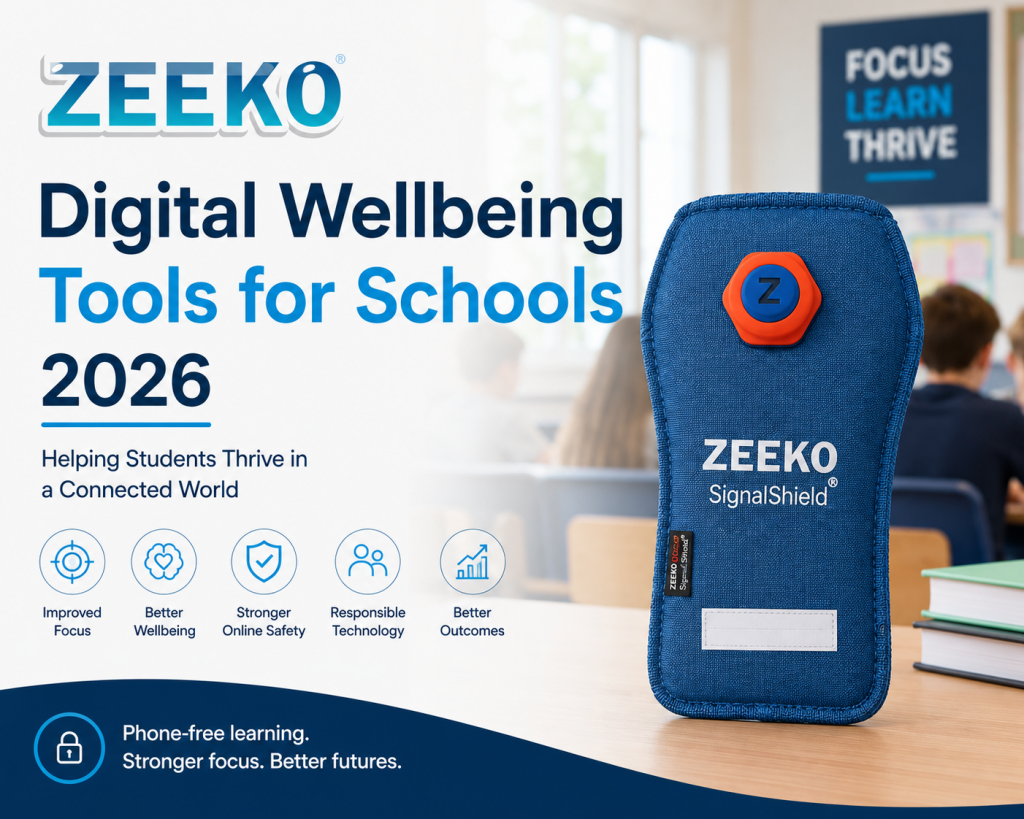
One increasingly popular solution is the use of secure phone pouch systems. Students place their phones into lockable pouches at the start of the day and keep the pouch with them until it is unlocked at a designated time.
Solutions such as Zeeko's Phone Blocking System help schools reduce distractions without removing student ownership of their devices. Teachers often report calmer classrooms, improved engagement, and more meaningful face-to-face interactions among students.
Digital Citizenship Education Platforms
Digital citizenship education teaches students how to behave responsibly online. These programmes cover topics such as digital footprints, respectful communication, misinformation, privacy protection, and ethical technology use.
Rather than simply telling students what not to do, digital citizenship programmes empower them to make informed decisions in digital environments.
Internet Safety Training Platforms
Internet safety training helps students understand online risks and develop practical strategies to stay safe.
Common topics include:
- Cyberbullying prevention
- Online privacy
- Safe social media use
- Password security
- Recognising scams and phishing attempts
As online threats continue to evolve, regular internet safety education has become an essential component of school safeguarding efforts.
Student Wellbeing Monitoring Tools
Many schools now use wellbeing platforms that allow students to share feedback about their wellbeing and access support when needed.
Some modern systems use artificial intelligence to identify patterns that may indicate a student requires additional support. These tools help wellbeing teams intervene earlier and provide more personalized assistance.
Parent Engagement Platforms
Successful digital wellbeing programmes extend beyond the school gates.
Parent engagement platforms help schools share guidance, resources, and updates with families. When parents and schools work together, students receive more consistent messages about healthy technology use.
How Digital Wellbeing Supports Student Mental Health
There is growing recognition that digital wellbeing and mental wellbeing are closely connected.
Students who spend excessive time online may experience increased stress, disrupted sleep patterns, and reduced opportunities for face-to-face interaction. Digital wellbeing tools help address these challenges by encouraging healthier technology habits.
Schools are increasingly incorporating wellbeing education into their broader curriculum, helping students understand:
- The impact of screen time on wellbeing
- The importance of digital balance
- Strategies for managing online pressure
- Techniques for maintaining healthy routines
These skills can benefit students both inside and outside the classroom.
The Link Between Digital Wellbeing and Online Safety
Digital wellbeing and online safety should not be viewed as separate initiatives. In reality, they are closely interconnected.
Students who understand responsible technology use are more likely to:
- Communicate respectfully online
- Protect their personal information
- Recognize harmful content
- Report cyberbullying incidents
- Make safer decisions when using digital platforms
Schools that combine online safety education with broader digital wellbeing programmes often achieve stronger long-term outcomes.
A Realistic School Example
Imagine a secondary school where teachers frequently struggle with phone-related distractions. Students check social media during lessons, online conflicts disrupt classroom relationships, and many learners find it difficult to stay focused.
The school introduces a comprehensive digital wellbeing strategy that includes:
- A secure phone pouch programme
- Digital citizenship lessons
- Internet safety training
- Parent information sessions
- Student wellbeing support tools
Within a year, teachers report fewer classroom disruptions, students become more engaged in learning, and parents notice healthier technology habits at home.
While every school's experience will differ, this example illustrates how a balanced digital wellbeing approach can positively influence learning, behaviour, and wellbeing.
Challenges Schools May Face
Implementing digital wellbeing initiatives is not always straightforward.
Some common challenges include:
Budget Limitations
Schools often have limited resources available for new initiatives. Starting with high-impact solutions and gradually expanding programmes can help manage costs.
Student Resistance
Students may initially be reluctant to accept changes such as phone restrictions. Clear communication about the reasons behind these initiatives is essential.
Staff Training
Teachers need confidence and support to implement new systems effectively. Ongoing professional development plays a key role in long-term success.
Parent Concerns
Some parents worry about access to their children during the school day. Transparent communication and clearly defined emergency procedures can help address these concerns.
The Future of Digital Wellbeing in Schools
Looking ahead, digital wellbeing will continue to evolve alongside educational technology.
Emerging trends include:
- AI-driven wellbeing insights
- Personalized wellbeing support plans
- Digital wellness dashboards
- Hybrid wellbeing programmes
- Enhanced parent engagement tools
- Greater adoption of phone-free school initiatives
Schools are increasingly recognizing that wellbeing is not separate from learning. Students perform best when they feel safe, focused, supported, and able to manage technology responsibly.
Conclusion
Technology will remain an important part of education, but schools must ensure it supports learning rather than undermining it.
Digital wellbeing tools for schools provide practical ways to reduce distractions, improve student focus, strengthen online safety, and support mental health. From phone-free school programmes and internet safety training to digital citizenship education and wellbeing platforms, schools now have access to a wide range of solutions that promote healthier technology use.
In 2026, digital wellbeing is no longer simply a trend. It is becoming an essential component of effective education, helping students develop the skills, habits, and resilience they need to succeed in a digitally connected world.
Explore Zeeko’s Home Page to discover our mission on the About Us Page, innovative Phone Blocking System, and engaging Phoenix Quest 10 programme. We provide Internet Safety Seminars, the Zeeko Report Card, and the Magical Leaders Choose Country initiative, alongside insights from our Digital Trend Report. Stay connected with us on Facebook and Instagram for updates.