

Internet Safety Statistics Ireland 2026
The internet has become an essential part of everyday life for children, teenagers, parents, and schools across Ireland. With Internet Safety Statistics Ireland, From online learning and social media to gaming and AI-powered tools, young people are spending more time online than ever before.
While digital technology offers many benefits, recent internet safety statistics from Ireland highlight growing concerns around online risks, cyberbullying, stranger contact, harmful content, and excessive screen time.
This article explores the latest Internet Safety Statistics Ireland 2026 and what they mean for parents, educators, and school leaders.
Internet Usage in Ireland Continues to Grow
Internet access in Ireland is now almost universal.
According to the Central Statistics Office (CSO), 95% of Irish households have internet access, while 95% of internet users go online daily. Among households with children, internet usage is even higher, with 98% of users accessing the internet every day or almost every day. (Central Statistics Office)
These figures demonstrate how deeply connected Irish families have become, making online safety education more important than ever.
Key Internet Usage Statistics Ireland 2026
| Statistic | Percentage |
|---|---|
| Households with internet access | 95% |
| Internet users online daily | 95% |
| Households with children using internet daily | 98% |
| Students using the internet daily | 100% |
Source: CSO Internet Coverage and Usage in Ireland 2025.
Children Are Spending More Time Online
Nghiên cứu from CyberSafeKids involving over 9,000 children aged 8–15 reveals that digital technology is a central part of childhood in Ireland. The organisation's latest findings show growing use of social media platforms, online gaming, messaging apps, and AI chatbots among both primary and secondary school students. (CyberSafeKids)
One notable trend is the rise of AI tools, with:
- 26% of children aged 8–12 using AI chatbots
- 36% of children aged 12–15 using AI chatbots for homework, information, or social interactions
As new technologies become more accessible, children are encountering online risks at younger ages.
Stranger Sự tiếp xúc Remains a Major Concern
One of the most worrying internet safety statistics in Ireland relates to interactions with strangers online.
Recent CyberSafeKids findings revealed that 51% of children aged 8–12 have no parental restrictions on online contact, increasing the likelihood of interactions with unknown individuals through games, apps, and social media platforms. (The Irish Times)
Earlier research found that:
- 65% of children aged 8–12 had been contacted by a stranger online.
- Popular platforms involved included gaming and video-sharing platforms commonly used by children. (The Sun)
These statistics highlight the importance of parental controls, digital literacy education, and regular conversations about online safety.
Social Media Use Starts Earlier Than Many Parents Realise
Although most social media platforms have a minimum age requirement of 13, usage among younger children remains widespread.
Recent Irish research found that:
- More than 70% of children under 13 are using age-restricted social media platforms.
- 69% of children under 12 are active on social media despite age restrictions.
This early exposure can increase the risk of:
- Cyberbullying
- Exposure to inappropriate content
- Online grooming
- Privacy breaches
- Misinformation
For schools and parents, these findings reinforce the need for proactive online safety education from an early age.
Cyberbullying Continues to Affect Young People
Cyberbullying remains one of the most common online risks facing children and teenagers in Ireland.
According to CyberSafeKids research, group messaging platforms and social media channels are frequently linked to bullying incidents among young users. WhatsApp, Snapchat, TikTok, and other social platforms are commonly mentioned in reports relating to harmful online interactions.
The impact of cyberbullying can include:
- Reduced self-esteem
- Anxiety and stress
- Poor academic performance
- Social isolation
- Mental health challenges
Schools increasingly recognise that internet safety education and digital wellbeing programmes are essential components of student support.
Online Safety Risks Are Evolving
The digital risks facing children today extend far beyond traditional concerns. Recent Irish reports highlight growing issues including:
AI-Generated Harmful Content
Reports of computer-generated child sexual abuse material in Ireland increased by 325% in 2025, demonstrating how emerging technologies are creating new online safety challenges. (The Sun)
Exposure to Harmful Content
Children continue to report exposure to:
- Violent content
- Sexual content
- Scam attempts
- Online harassment
- Misinformation
Online Grooming Through Gaming
Irish child protection organisations have warned that online grooming through gaming platforms is increasing, with some reports suggesting harmful contact can occur within seconds of entering certain online environments.
Irish Users Are Becoming More Security Conscious
The good news is that internet users in Ireland are becoming more aware of privacy and security settings.
According to the CSO:
- 70% restrict access to their location online.
- 67% limit access to personal data for advertising purposes.
- 50% restrict access to their online profiles and content.
These behaviours indicate growing awareness of digital privacy, though experts agree there is still room for improvement.
What These Internet Safety Statistics Mean for Schools?
For schools across Ireland, the data points to several priorities:
1. Digital Citizenship Education
Students need practical guidance on:
- Safe social media use
- Online privacy
- Critical thinking
- AI literacy
- Recognising scams and misinformation
2. Cyberbullying Prevention
Schools should have clear reporting systems and education programmes that address online behaviour and respectful communication.
3. Phone-Free Learning Environments
Many schools are introducing phone management solutions and phone-free policies to reduce distractions, improve focus, and encourage healthier digital habits.
4. Parent Engagement
Parents remain one of the strongest influences on children's online safety. Schools that provide parent workshops and online safety resources often achieve better outcomes.
Key Internet Safety Statistics Ireland 2026 at a Glance
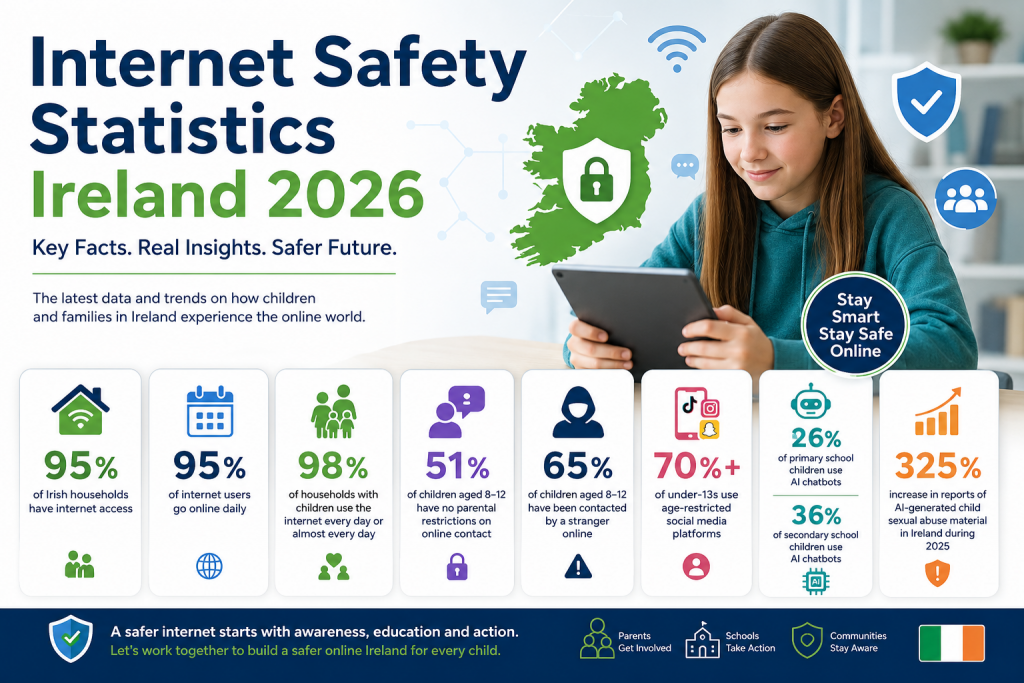
- 95% of Irish households have internet access.
- 95% of internet users go online daily.
- 98% of households with children use the internet every day or almost every day.
- 51% of children aged 8–12 have no parental restrictions on online contact.
- 65% of children aged 8–12 have been contacted by a stranger online.
- More than 70% of under-13s use age-restricted social media platforms.
- 26% of primary school children use AI chatbots.
- 36% of secondary school children use AI chatbots.
- Reports of AI-generated child sexual abuse material increased by 325% in Ireland during 2025.
Những suy nghĩ cuối cùng
The latest Internet Safety Statistics Ireland 2026 show that digital technology is firmly embedded in the lives of Irish children and families. While internet access brings educational and social benefits, the data also highlights ongoing challenges around cyberbullying, stranger contact, social media exposure, online grooming, and emerging AI-related risks.
For parents, schools, and policymakers, the message is clear: online safety education must remain a priority. By combining digital literacy, parental involvement, effective school policies, and age-appropriate technology use, Ireland can help young people enjoy the benefits of the online world while staying safe.
FAQs
What are the latest internet safety statistics in Ireland?
Recent statistics show that 95% of Irish households have internet access, 95% of users go online daily, and more than 70% of children under 13 use age-restricted social media platforms. (Central Statistics Office)
How many Irish children have been contacted by strangers online?
Nghiên cứu found that 65% of children aged 8–12 have been contacted by a stranger online, highlighting the importance of online safety education and parental supervision. (The Sun)
Is cyberbullying a problem in Ireland?
Yes. Cyberbullying remains a significant concern among children and teenagers, particularly through messaging apps, social media platforms, and group chats. (The Sun)
Why is internet safety important for schools?
Schools play a vital role in teaching digital citizenship, preventing cyberbullying, promoting online privacy, and helping students develop safe and responsible online behaviours.
What are the biggest online risks for children in Ireland?
The main risks include cyberbullying, stranger contact, exposure to harmful content, online grooming, misinformation, privacy breaches, and emerging AI-related threats. (The Sun)