

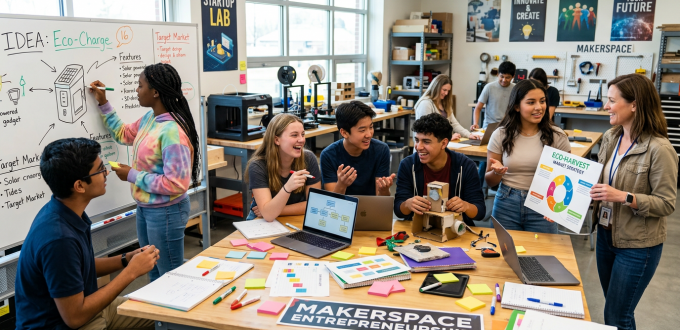
Entrepreneur programmes immerse students in hands-on business challenges, turning abstract concepts into practical abilities like problem-solving and resilience. These initiatives go beyond textbooks, preparing young people for a world where adaptability and innovation matter more than rote learning.
What are Entrepreneur Programmes?
An entrepreneur programme is a structured educational experience where students ideate, plan, and sometimes launch real or simulated ventures. Formats range from school clubs and summer camps to university competitions and national challenges like Ireland's Student Enterprise Awards.
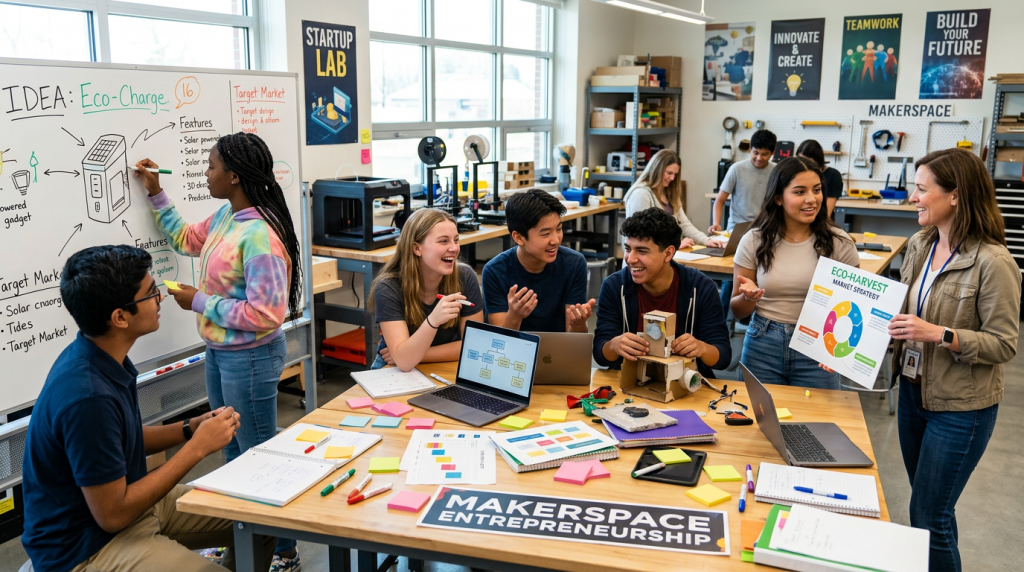
Participants tackle:
- Market research and customer interviews.
- Product or service prototyping.
- Pitching to judges or investors.
- Budgeting, marketing, and sales.
Unlike traditional business classes, these programmes prioritise action over theory, fostering an entrepreneurial mindset through trial and error.
Core Skills Students Gain
1. Problem-Solving Under Pressure: Students identify everyday issues—campus parking chaos, sustainable snack options—and devise solutions. They learn to pivot when initial ideas fail, mirroring real startup dynamics.
2. Financial Literacy and Resourcefulness: Bootstrapping on shoestring budgets teaches prioritisation. Participants track expenses, forecast revenue, and negotiate with suppliers, gaining confidence in numbers without needing advanced maths.
3. Teamwork and Leadership: Most programmes require groups, forcing collaboration across personalities. Roles rotate—CEO one week, marketer the next—building versatility and conflict resolution.
4. Communication and Pitching: Presenting to panels hones clarity and persuasion. Students distil complex ideas into 3-minute pitches, a skill vital for job interviews or funding rounds.
5. Resilience to Failure: Over 80% of ventures "fail" in competitions, but debriefs turn losses into lessons. This normalises setbacks, countering perfectionism prevalent in academic settings.
Real-World Examples from Student Entrepreneurship Education
Ireland's Young Entrepreneur Scheme engages 50,000+ primary students yearly in mini-companies, generating €1M+ in sales. Participants report 30% higher confidence in decision-making post-programme.
Secondary programmes like Forus and LEO-backed initiatives culminate in trade fairs, where students sell to real customers, handling cash and feedback live.
University accelerators, such as NUI Galway's Startup Programme, pair students with mentors for equity-free seed funding, bridging campus to commerce.
Benefits Beyond Business
Student entrepreneurship education equips for diverse careers:
- Creativity aids STEM innovators and artists alike.
- Adaptability suits gig economy freelancers.
- Networking opens doors via alumni and mentors.
Studies show participants earn 15-20% more early-career salaries, attributing gains to soft skills employers prioritise.
Challenges and Solutions
Participation demands time, sometimes clashing with exams. Schools mitigate with flexible scheduling and academic credits.
Introverted students may shy from pitching; programmes now include low-stakes practice and diverse formats like written plans.
Equity gaps exist—rural or low-income access lags. Government subsidies and online modules are closing this divide.
| Skill | Traditional Classrooms | Entrepreneur Programmes |
|---|---|---|
| Problem-Solving | Hypothetical cases | Live market challenges |
| Financial Management | Basic accounting | Real budgeting/sales |
| Team Dynamics | Assigned groups | Self-formed, rotating |
| Failure Tolerance | Graded perfection | Iterative experimentation |
| Networking | Teacher-led | Mentors/investors |
Getting Involved: Practical Steps
For Students:
- Join school clubs or local Junior Chamber International.
- Enter national competitions via Local Enterprise Offices.
- Use free platforms like Young Enterprise for self-paced modules.
For Parents/Teachers:
- Encourage rather than direct—let students lead.
- Connect with alumni mentors for realism.
- Fundraise for trade fair stalls (€50-200 typical).
For Schools:
- Integrate as extracurricular or SPHE credits.
- Partner with LEO for free facilitator training.
- Host mini-pitches to build school-wide culture.
Why Start Early?
Gen Z faces AI disruption and climate urgency—entrepreneurial skills future-proof them. Programmes shift mindsets from "job seeker" to "value creator," aligning with economies valuing initiative.
One participant's reflection: "I didn't win, but I learned more failing my pitch than acing exams."
Kết luận:
Entrepreneur programmes deliver irreplaceable skills through immersion, outperforming lectures in building grit and ingenuity. As student entrepreneurship education expands, it empowers the next generation to solve tomorrow's problems today.
Explore Zeeko’s Home Page to discover our mission on the Về Us Page, innovative Phone Blocking System, and engaging Phoenix Quest 10 programme. We provide Hội thảo An toàn Internet, the Zeeko Report Card, and the Thủ lĩnh phép thuật Choose Country initiative, alongside insights from our Báo cáo xu hướng kỹ thuật số. Stay connected with us on Facebook and Instagram for updates.