

Student smartphones are now part of everyday life, but managing them in classrooms can be challenging. Phones can interrupt lessons, compete for students’ attention, create safeguarding concerns, and add to the workload of teachers who are already expected to manage learning, behaviour, and technology at the same time.
The challenge is not simply whether schools should “allow” or “ban” phones. The bigger question is: what practical system can help schools manage phones consistently without creating unnecessary conflict?
Looking to reduce classroom distractions and manage student phone usage effectively?
Explore Zeeko’s Phone Pouch Solution designed specifically for schools.
Quick Answer: What Classroom Phone Management Solution Actually Works?
The most effective classroom phone management solution is usually a combination of a clear school-wide policy, consistent staff enforcement, practical phone management tools, and effective communication with students and parents. A policy alone may not be enough. Schools often achieve better consistency when expectations are supported by a practical student phone control system that reduces access to devices during learning time.
What is a Classroom Phone Management Solution?
A classroom phone management solution is a set of policies, procedures, tools, and behaviours used by a school to manage student mobile phone use during lessons and other parts of the school day.
It may include:
- Clear school-wide mobile phone rules
- Teacher-led classroom procedures
- Designated phone storage
- Lockable phone pouches
- Student phone control systems
- Digital device management tools
- Parent and student communication
- Staff training and consistent enforcement
The most effective approach is rarely a single product or rule. Instead, schools need a system that answers practical questions such as:
- When can students use their phones?
- Where are phones kept during lessons?
- What happens when a student refuses to follow the policy?
- How are emergencies handled?
- How are parents informed?
- Are all staff applying the rules consistently?
A good system turns a general expectation such as “phones should not be used in class” into a clear and manageable process.
Why do Schools Need Classroom Phone Management?
Mobile phones can create several challenges in learning environments.
A student may check notifications during a lesson, respond to a message, access social media, record another student, or use a phone for activities unrelated to learning. Even when a phone is not actively being used, its presence can create opportunities for distraction.
For teachers, the challenge is often consistency. One teacher may ask students to keep phones in bags, another may collect them, and another may permit limited use. Over time, students may receive different expectations depending on the classroom they enter.
A well-designed classroom phone management solution can help schools:
- Reduce unnecessary classroom interruptions
- Create clearer expectations for students
- Reduce the need for repeated verbal reminders
- Hỗ trợ a more focused learning environment
- Improve consistency between classrooms
- Reduce the burden on individual teachers
- Hỗ trợ broader digital wellbeing objectives
Phone management should also be considered alongside the school's wider approach to online safety, safeguarding, behaviour, and digital citizenship.
Why do Traditional Classroom Phone Rules Often Fail?
Many school phone policies fail not because the underlying idea is wrong, but because the policy is difficult to enforce consistently.
- Students can ignore verbal instructions: A rule such as “please put your phone away” depends on voluntary compliance. Many students will follow the instruction, but others may keep devices hidden in pockets, under desks, or inside clothing. This can turn phone management into a repeated cycle of reminders and confrontation.
- Rules may differ between teachers: Inconsistent enforcement creates confusion. If students can use their phones freely in one lesson but must surrender them in another, they may view the policy as dependent on the teacher rather than as a school-wide expectation.
- Phones can remain easily accessible: A phone inside a school bag may still be within reach. A student can quickly retrieve it when attention shifts away from the teacher.
- Teachers may spend too much time managing devices: Every minute spent dealing with phone use is time that could otherwise be spent teaching, supporting students, or managing the lesson.
- Policies may lack an enforcement mechanism: A written policy explains what should happen. It does not necessarily provide the practical system needed to make it happen.
This is why schools often need to combine policy with a practical student phone control system.
What are the Most Effective Classroom Phone Management Solutions?
Different schools need different approaches. The right solution depends on school size, student behaviour, staff capacity, budget, and the level of phone control required.
1. Clear School-Wide Mobile Phone Policies
A strong policy is the foundation of any phone management strategy.
It should clearly explain:
- When phones are allowed
- When phones must be stored
- Where devices should be kept
- What happens if a student breaks the rules
- How exceptions are managed
- How emergencies are handled
- What role parents and guardians play
The policy should be simple enough for students and staff to understand quickly.
A complicated policy can be difficult to apply consistently. A clear rule, supported by a practical procedure, is usually easier to implement.
For example, a school might establish a simple expectation that phones are not accessible during lessons unless a teacher has specifically authorised their use for an educational purpose.
The exact policy will vary between schools, but clarity and consistency are essential.
2. Classroom Phone Storage
Some schools use classroom storage solutions such as:
- Phone boxes
- Lockers
- Numbered storage compartments
- Secure cabinets
- Designated classroom storage areas
These systems can be effective when students are comfortable following the procedure and staff can manage the process efficiently.
Advantages
- Relatively simple to understand
- Can be inexpensive
- Makes devices physically separate from students
- Can support a classroom-level phone routine
Limitations
Storage systems may create additional responsibilities for staff. Schools also need to consider device security, privacy, lost-property procedures, and what happens if a student refuses to hand over a phone.
A storage system may work well in one school but be less suitable in another.
3. Lockable Phone Pouches
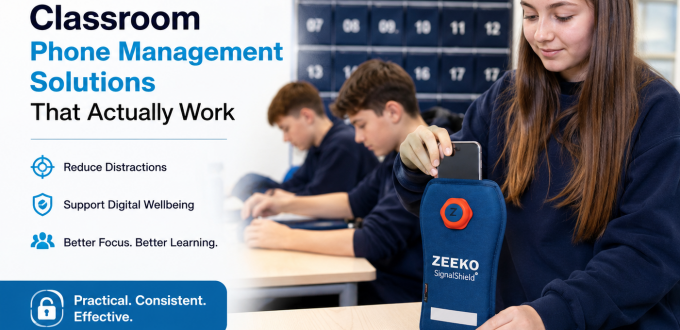
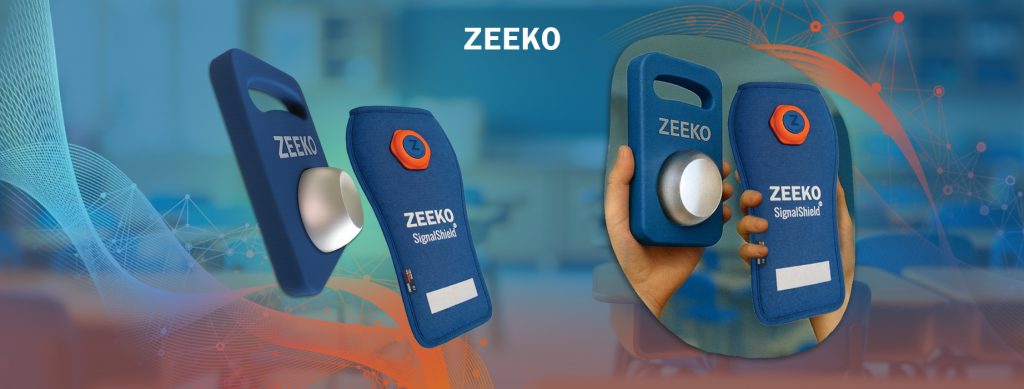
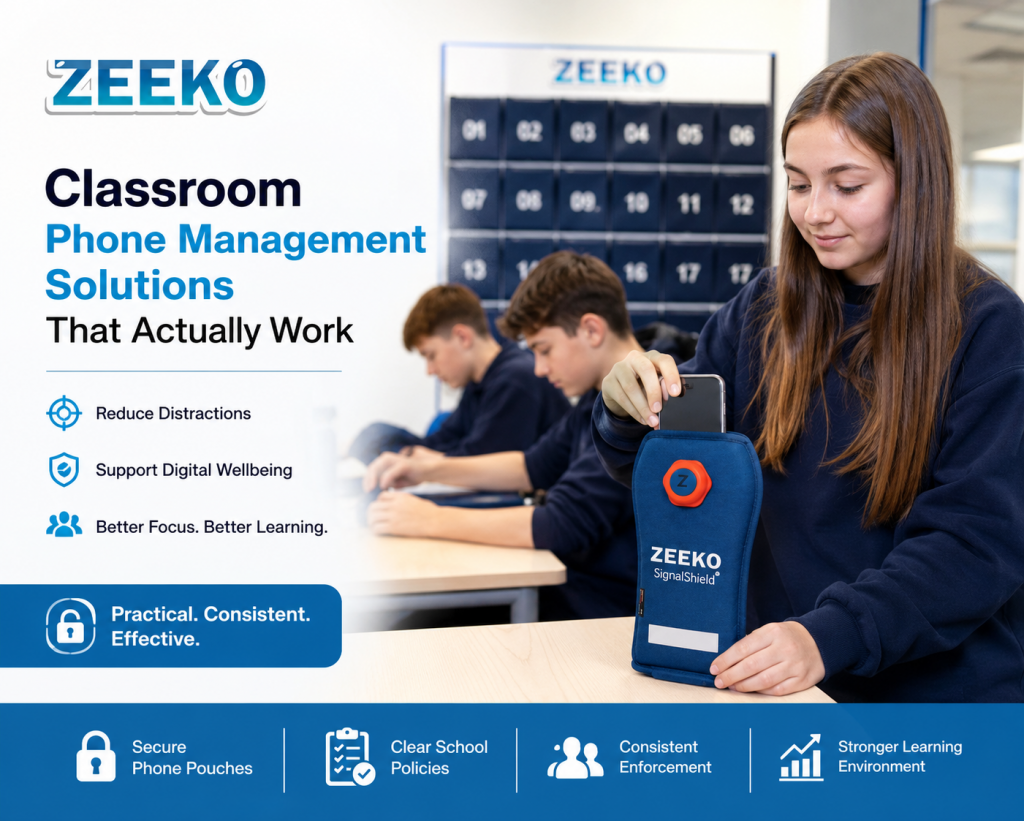
Lockable phone pouches are designed to keep student phones secured and inaccessible during specified periods while allowing students to retain possession of their devices.
This approach can provide a structured alternative to repeatedly asking students to put phones away.
Depending on the system used, students may place their own phone into a pouch and the device remains secured until the appropriate release process.
Why can phone pouches be useful?
They can help create a physical barrier between students and their phones.
Instead of relying entirely on:
“Please do not use your phone.”
the school establishes a clearer process:
“Your phone is secured during this period and becomes available again according to the school procedure.”
This can reduce opportunities for impulsive phone use.
However, phone pouches should not be viewed as a standalone solution. Their effectiveness depends on:
- Clear school policy
- Staff consistency
- Student understanding
- Appropriate implementation
- Emergency procedures
- Communication with parents
A physical management tool works best when it supports a wider behaviour and digital wellbeing strategy.
4. Student Phone Control Systems
A student phone control system is a structured approach for managing student access to personal smartphones during the school day.
It may combine:
- School-wide rules
- Physical phone management
- Student accountability
- Staff procedures
- Parent communication
- Clear release and exception processes
The key benefit of this approach is that it moves phone management away from individual teacher preference.
Instead of every teacher creating their own method, the school can implement a consistent system across classrooms or the wider school day.
This can make expectations easier for students to understand and easier for staff to apply.
5. Digital Restrictions and Device Management
Technology-based restrictions can be valuable, particularly for school-owned devices.
Schools may use digital tools to manage:
- Access to websites
- Applications
- School networks
- Screen activity
- Educational platforms
However, digital restrictions may not fully solve the problem of personal smartphones.
A school can restrict access to certain websites on its own network, but that does not necessarily prevent a student from using a mobile data connection, checking notifications, or accessing apps on a personal device.
Digital tools and physical phone management therefore address different problems.
For many schools, the strongest approach is not to choose between technology and policy, but to use the appropriate tool for each type of device and behaviour.
Is a Student Phone Control System Better Than Relying on Teacher Enforcement?
A student phone control system can provide greater consistency than relying entirely on individual teachers.
Teacher enforcement remains important. Staff must explain expectations, manage exceptions, and respond to non-compliance.
However, teachers should not be expected to solve the entire phone management problem through repeated verbal reminders.
A structured system can help by:
- Making the expected behaviour clear
- Reducing opportunities for phone use
- Creating a consistent process
- Hỗ trợing accountability
- Reducing differences between classrooms
The best approach is usually not to remove teachers from the process, but to give them a system that is easier to apply.
Are Phone Pouches Effective in Schools?
Phone pouches can be effective when they are part of a clear and consistently implemented school policy.
Their potential advantage is that they physically reduce access to the device during periods when phones are not permitted.
However, effectiveness depends on implementation. A phone pouch system may not achieve its intended results if:
- Students do not understand the purpose
- Staff apply the system inconsistently
- The process is difficult to use
- Exceptions are unclear
- Parents are not informed
- The school has no response to non-compliance
Schools should therefore evaluate the complete system rather than asking whether a product alone will solve every phone-related challenge.
How Can Schools Manage Student Phones Without Creating Unnecessary Conflict?
The way a policy is introduced can significantly influence how students and parents respond.
Schools can reduce unnecessary conflict by:
- Explaining the purpose: Students are more likely to understand a policy when the school explains that the goal is to support learning, reduce unnecessary distractions, and create clear expectations.
- Applying rules consistently: Inconsistent enforcement can create arguments about fairness. A clear school-wide procedure can reduce confusion.
- Providing reasonable exceptions: Schools should have procedures for legitimate situations, including approved educational use and relevant individual circumstances.
- Communicating with parents: Parents should understand: What the policy requires, Why it has been introduced, How they can contact their child during the school day, What happens in an emergency?
- Avoiding unnecessary confrontation: A system that makes the expected behaviour clear can reduce the need for repeated arguments between individual teachers and students.
The goal should be a predictable process rather than a daily struggle over individual phones.
What Makes a Student Phone Control System Effective?
An effective system should be evaluated against practical criteria.
- Ease of use: If the system takes too much time to operate, staff may struggle to use it consistently.
- Consistency: Students should experience broadly similar expectations across classrooms and school areas.
- Accountability: The school should have a clear process for managing non-compliance without leaving individual teachers to improvise.
- Security: Schools should consider how devices are protected and what happens if a phone is lost or damaged.
- Scalability: The approach should work for the school's current population and remain practical as the school grows.
- Student experience: Students should understand what is expected and how the system works.
- Staff adoption: Staff training is essential. Even a well-designed solution can fail if employees do not understand or support the process.
- Emergency procedures: The school should clearly explain how urgent communication is managed.
- Parent communication: Parents need to know how to contact the school and what the phone policy means for their child.
A successful system is therefore not simply the most restrictive option. It is the one that can be implemented reliably.
How Can Schools Successfully Implement a Classroom Phone Management Solution?
A step-by-step approach can make implementation easier.
Step 1: Assess the current problem
Identify the main challenges. Are phones affecting:
- Lesson concentration?
- Behaviour?
- Social media use?
- Safeguarding?
- Teacher workload?
- Student relationships?
The answer should influence the solution.
Step 2: Define clear expectations
Create simple rules that students, staff, and parents can understand. Avoid vague language such as “use phones responsibly” if the school actually expects phones to be inaccessible during lessons.
Step 3: Select the right management approach
Consider whether the school needs:
- Policy changes
- Classroom storage
- Lockable phone pouches
- A broader student phone control system
- Digital restrictions
- A combination of approaches
Step 4: Communicate before implementation
Explain the change to:
- Staff
- Học sinh
- Parents
- School administrators
Provide clear information about the reasons, procedures, exceptions, and emergency communication.
Step 5: Train staff
Staff should know exactly:
- What the policy says
- How to use the selected system
- What to do when students do not comply
- How to handle exceptions
- Who to contact for support
Step 6: Introduce the system consistently
A new system should be implemented with clear leadership support. If some staff follow the policy while others ignore it, students may quickly become confused.
Step 7: Monitor the results
Schools should review:
- Staff feedback
- Student feedback
- Parent concerns
- Behaviour incidents
- Practical problems
- Compliance levels
Step 8: Improve the system
No policy should be considered permanently finished. Schools may need to adjust procedures after identifying issues during implementation.
What Common Mistakes Should Schools Avoid?
Creating a policy without an enforcement plan
A policy needs a practical process.
- Relying only on verbal reminders: Repeated reminders can increase teacher workload and may not prevent phone access.
- Allowing inconsistent implementation: Students need predictable expectations.
- Ignoring student and parent concerns: Communication is essential, particularly when a new policy changes established routines.
- Choosing a complicated solution: If staff cannot operate a system efficiently, consistent adoption becomes difficult.
- Failing to plan for emergencies: Schools should explain how parents and students can communicate when necessary.
- Not reviewing the policy: Schools should use feedback and experience to improve the system over time.
How Should Schools Choose the Right Classroom Phone Management Solution?
Before selecting a solution, school leaders should consider:
- School size: A solution that works for a small school may require different processes in a large secondary school.
- Number of students: The scale of the student population affects staffing, storage, logistics, and implementation.
- Budget: Schools should consider both initial costs and ongoing operational requirements.
- Staff workload: A system should not create unnecessary administrative work for teachers.
- Security requirements: Schools should consider how devices are stored, secured, and managed.
- Ease of implementation: The simpler the daily process, the more likely staff are to apply it consistently.
- Student behaviour: Schools with significant phone-related challenges may need a more structured physical management approach.
- Parent expectations: Parent communication and emergency procedures should be part of the decision-making process.
- Existing policies: The new system should align with the school's behaviour, safeguarding, digital wellbeing, and acceptable-use policies.
- Scalability: The solution should remain practical as student numbers and school requirements change.
A Practical Decision-Making Checklist
Before choosing a classroom phone management solution, ask:
- Can every staff member understand the system quickly?
- Can it be applied consistently?
- Does it reduce reliance on repeated verbal instructions?
- Is there a clear process for exceptions?
- Are emergency communication procedures clear?
- Can the school explain the system to parents?
- Is the system secure and practical?
- Can it scale across the school?
- Will students understand what is expected?
- Can the school monitor and improve the system over time?
The answers can help schools identify whether they need a policy adjustment, a storage solution, a physical phone management system, digital restrictions, or a combination of approaches.
Frequently Asked Questions
What is the best classroom phone management solution?
The best classroom phone management solution is one that combines clear rules with practical enforcement. For many schools, this means a school-wide mobile phone policy supported by consistent staff procedures and an appropriate physical or digital management tool. The right solution depends on school size, student behaviour, staff capacity, security requirements, and how much control the school needs.
How does a student phone control system work?
A student phone control system establishes a structured process for managing personal smartphones during specified school periods. It may combine policy, physical phone management, accountability, staff procedures, and parent communication. The goal is to create consistent expectations and reduce reliance on individual teachers repeatedly asking students to put phones away.
Do phone pouches help reduce classroom distractions?
Phone pouches can help reduce distractions by making smartphones less immediately accessible during lessons or other phone-free periods. Their effectiveness depends on consistent implementation, clear school policies, student understanding, staff adoption, and appropriate procedures for exceptions and emergencies. A pouch is most effective as part of a wider phone management strategy.
Should schools completely ban mobile phones?
Not necessarily. Schools may choose different approaches depending on their students, safeguarding needs, educational objectives, and local policies. Some schools may restrict phones during lessons, while others may require devices to be secured for longer periods. The important consideration is whether the policy is clear, practical, consistently enforced, and appropriate for the school's circumstances.
How can teachers enforce a phone policy consistently?
Teachers need a clear school-wide procedure rather than relying only on personal judgement. Staff training, simple rules, practical phone management tools, consistent consequences, and clear exception procedures can all help. A shared student phone control system can also reduce differences between classrooms and make expectations easier for teachers to apply.
What should schools consider before choosing a phone management system?
Schools should consider the number of students, budget, staff workload, security requirements, student behaviour, parent expectations, emergency communication, ease of implementation, and scalability. Schools should also consider whether the system aligns with existing behaviour, safeguarding, digital wellbeing, and acceptable-use policies.
Can digital device management replace physical phone management?
Not always. Digital management tools can help control school-owned devices, networks, websites, and applications. Personal smartphones may still use mobile data or other functions outside the school's digital environment. For this reason, schools may need a combination of policy, physical management, and digital controls depending on the problem they are trying to solve.
How can schools introduce a phone management policy successfully?
Schools should first assess their current challenges, define clear rules, choose a practical solution, communicate with staff, students, and parents, and provide staff training. After implementation, the school should collect feedback, monitor practical issues, and review the policy. Continuous improvement is important because the best system is one that works in the school's real environment.
Conclusion: The Best Solution Is the One Schools Can Apply Consistently
The most effective classroom phone management solution is not necessarily the most restrictive one.
The strongest approach is usually the one that creates clear expectations, reduces unnecessary access to phones, can be applied consistently, is practical for teachers, and supports a positive learning environment.
A policy alone may not be enough. Verbal reminders alone may not be enough. Digital restrictions alone may not be enough.
Schools often need a balanced combination of policy, communication, behaviour management, staff training, and practical tools.
A well-designed student phone control system can help turn a general expectation into a consistent process that students, teachers, and parents understand.
The key question for school leaders is not simply, “Should students have phones?”
It is:
“What system will help our school manage phones fairly, consistently, and practically?”
That is the foundation of effective classroom phone management.
Explore Zeeko’s Home Page to discover our mission on the Về Us Page, innovative Phone Blocking System, and engaging Phoenix Quest 10 programme. We provide Hội thảo An toàn Internet, the Zeeko Report Card, and the Thủ lĩnh phép thuật Choose Country initiative, alongside insights from our Báo cáo xu hướng kỹ thuật số. Stay connected with us on Facebook and Instagram for updates.