

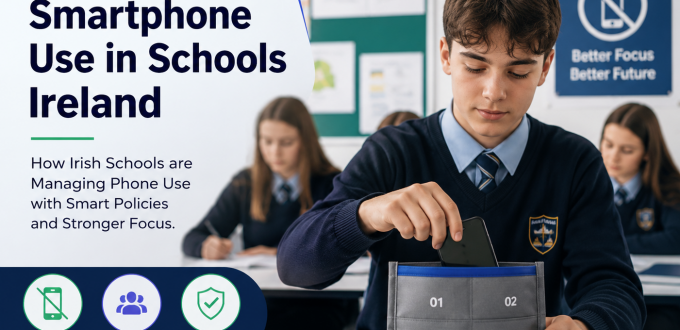
Smartphone use among children and teenagers has become one of the biggest challenges facing schools today. Across Ireland, parents, teachers, and school leaders are increasingly discussing how smartphones affect learning, social interaction, mental health, and classroom behavior. As a result, many schools are introducing stricter rules and clearer guidelines around smartphone use in schools Ireland.
Smartphone Use in Schools Ireland
In recent years, Irish schools have noticed a sharp rise in distractions linked to mobile phones. Students are spending more time on social media, messaging apps, gaming, and online content during school hours. While smartphones can offer educational benefits, many educators believe unrestricted access is affecting concentration, participation, and student wellbeing.
The conversation is no longer simply about banning phones. Instead, schools are trying to find a balanced approach that supports learning while reducing unnecessary distractions. Different schools are adopting different methods, including phone-free classrooms, locked pouch systems, restricted use policies, and digital responsibility education.
This article explores how schools in Ireland are managing smartphone usage, the reasons behind changing school phone rules Ireland, and what the future may look like for phones in Irish schools.
Looking to reduce classroom distractions and manage student phone usage effectively?
Explore Zeeko’s Phone Pouch Solution designed specifically for schools.
Smartphone Use in Schools Ireland: Current Situation
Smartphone ownership among Irish students is now extremely common. Many children receive their first smartphone during primary school, and by secondary school, most students carry internet-enabled devices every day.
Irish educators have reported several growing concerns connected to smartphone usage:
- Reduced classroom attention
- Increased social media distractions
- Cyberbullying incidents
- Sleep disruption among students
- Lower face-to-face interaction
- Anxiety linked to online pressure
Teachers across Ireland often describe classrooms where notifications, messaging, and social media interruptions make it difficult for students to remain focused for long periods.
At the same time, smartphones are deeply integrated into students’ daily lives. Many parents rely on phones for communication before and after school. Some schools also use digital tools and apps for homework, learning resources, and announcements.
This creates a difficult balancing act. Schools must decide how to encourage healthy technology habits without completely ignoring the role technology now plays in education and communication.
Growing Concerns About Student Screen Time
Research globally continues to show that teenagers spend several hours per day on smartphones. Irish schools are seeing the effects firsthand.
Some of the most common issues include:
Reduced Concentration
Students frequently check notifications during lessons, even when phones are not actively being used. This habit interrupts learning and reduces attention spans.
Social Media Pressure
Apps such as TikTok, Snapchat, Instagram, and messaging platforms create constant social pressure. Many schools report that online disputes often continue into the classroom.
Sleep and Fatigue
Teachers and parents are increasingly concerned about late-night screen usage affecting sleep quality. Tired students often struggle with participation and academic performance.
Increased Anxiety
Some educators believe constant online connectivity contributes to stress, fear of missing out (FOMO), and emotional dependency on devices.
Why Irish Schools are introducing Phone Rules?
Schools across Ireland are not introducing restrictions simply to punish students. Most school phone policies are designed to improve learning environments and support student wellbeing.
Classroom Distractions
One of the biggest reasons for new school phone rules Ireland is the impact smartphones have on concentration. Teachers often compete with:
- Social media notifications
- Messaging apps
- Mobile gaming
- Video content
- Online trends
Even brief interruptions can reduce lesson engagement and slow classroom progress. Many schools report that when phones are removed from immediate access, students participate more actively and stay focused longer.
Mental Health Concerns
Mental health is another major factor influencing policy decisions. Irish schools increasingly recognize links between:
- Excessive screen time
- Online comparison culture
- Anxiety
- Cyberbullying
- Social isolation
Some school leaders believe reducing smartphone access during school hours creates healthier social environments and gives students important breaks from online pressure.
Cyberbullying and Online Conflicts
Phones in Irish schools have also become connected to bullying concerns. Problems can include:
- Recording classmates without permission
- Sharing embarrassing photos or videos
- Group chat conflicts
- Anonymous messaging
- Online harassment during school hours
These issues often continue into classrooms, affecting student relationships and school culture.
Academic Performance
Many schools believe smartphone restrictions help improve:
- Classroom participation
- Homework quality
- Listening skills
- Reading engagement
- Teacher-student interaction
Several schools introducing restrictions have reported calmer classrooms and improved behavior.
School Phone Rules Ireland
There is no single nationwide smartphone policy followed by every Irish school. Instead, individual schools create their own rules based on age groups, school culture, and community needs. However, common patterns are emerging across Ireland.
Common Smartphone Restrictions
Many schools now require students to:
- Keep phones switched off during lessons
- Store phones in lockers or bags
- Hand phones to teachers during class
- Use phones only during emergencies
- Avoid social media during school hours
Some schools allow limited use for educational purposes, while others apply complete restrictions throughout the day.
Primary School Approaches
Primary schools in Ireland tend to have stricter rules. Many primary schools:
- Discourage students from bringing smartphones at all
- Require phones to remain off during the day
- Communicate directly with parents instead of students using phones
Some parent groups in Ireland have also supported voluntary agreements delaying smartphone ownership for younger children.
Secondary School Approaches
Secondary schools often take more flexible approaches because older students may:
- Travel independently
- Need communication with parents
- Use digital learning tools
However, many secondary schools still enforce strong restrictions during instructional time. Common secondary school policies include:
- No phones visible during class
- Teacher-controlled educational use only
- Confiscation for repeated misuse
- Restricted break-time usage
Phones in Irish Schools: Different Management Strategies
Irish schools are experimenting with different ways to manage smartphone use effectively.
Complete Phone Bans
Some schools have introduced full-day smartphone bans.
Under these systems:
- Students cannot access phones during school hours
- Phones may be stored in lockers or sealed pouches
- Violations may lead to confiscation
Supporters say complete bans:
- Reduce distractions significantly
- Improve student interaction
- Simplify rule enforcement
Critics argue:
- Students should learn responsible usage instead
- Parents may worry about communication access
Restricted Classroom Usage
Other schools permit phones under controlled conditions. Examples include:
- Educational apps during lessons
- Research activities
- Teacher-approved learning exercises
This approach attempts to balance technology integration with classroom discipline.
Phone Pouch Systems
Phone locking pouch systems are becoming increasingly popular internationally and are gaining attention in Ireland.
Under these systems:
- Students place phones into locked pouches at the start of the day
- Phones remain physically with students but inaccessible
- Pouches unlock at the end of the school day
Schools using pouch systems often report:
- Better student engagement
- Fewer distractions
- Improved social interaction during breaks
This method is viewed by many schools as a middle-ground solution between full bans and unrestricted access.
Digital Responsibility Programs
Some Irish schools focus less on punishment and more on education. These schools teach:
- Responsible digital behavior
- Online safety
- Healthy screen habits
- Cyberbullying prevention
- Digital citizenship
The goal is to help students develop long-term self-management skills rather than relying entirely on restrictions.
Understanding School Phone Policies
A strong school phone policy provides clear expectations for students, teachers, and parents. Good policies usually explain:
- When phones may be used
- Where phones should be stored
- Consequences for misuse
- Emergency communication procedures
- Educational exceptions
What Makes a Good Policy?
Effective school phone policies are:
- Clear and simple
- Consistently enforced
- Age-appropriate
- Communicated openly with parents
- Focused on student wellbeing
Schools that involve parents and students in discussions often experience better cooperation and smoother implementation.
Parent Communication Matters
Parents play a major role in policy success. Schools increasingly:
- Hold parent information sessions
- Share policy documents clearly
- Explain educational reasoning
- Provide emergency contact procedures
Strong communication helps reduce misunderstandings and builds community support.
Consistent Enforcement Is Essential
One major challenge with school phone rules Ireland is consistency. Policies work best when:
- All staff apply rules equally
- Expectations remain predictable
- Consequences are fair and transparent
Inconsistent enforcement can create frustration among students and parents.
Benefits of Smartphone Restrictions in Schools
Many Irish educators report positive changes after introducing stricter smartphone management policies.
Better Focus in Classrooms
One of the most commonly reported benefits is improved concentration. Without constant notifications:
- Students pay more attention
- Teachers spend less time managing distractions
- Lessons flow more smoothly
Improved Social Interaction
When phones are removed during breaks, students often:
- Talk more face-to-face
- Participate in activities
- Build stronger friendships
Some schools report that playgrounds and common areas become noticeably more social after restrictions are introduced.
Reduced Screen Dependency
Phone-free school hours give students regular breaks from constant digital stimulation. This can help:
- Improve emotional regulation
- Encourage healthier habits
- Reduce compulsive phone checking
Enhanced Classroom Engagement
Teachers frequently observe:
- Increased participation
- Better discussion quality
- More collaborative learning
Students may initially resist restrictions, but many later adapt positively.
Challenges Schools Face
Despite the benefits, managing phones in Irish schools is not always easy.
Parent Concerns About Safety
Some parents worry about losing direct communication with children during emergencies. Schools often address this concern by:
- Providing office contact systems
- Explaining emergency procedures
- Allowing communication through school administration
Student Resistance
Students may view restrictions as unfair or overly controlling. Schools introducing new policies sometimes face:
- Complaints
- Attempts to bypass rules
- Social media criticism
Clear communication and gradual implementation can help reduce resistance.
Enforcement Burden on Teachers
Teachers already manage significant workloads. Monitoring smartphone compliance can add:
- Extra classroom management responsibilities
- Conflicts with students
- Time-consuming enforcement issues
This is why many schools prefer systems that reduce direct teacher policing.
Balancing Technology Use
Schools also face pressure to integrate digital learning tools. Completely removing technology may conflict with:
- Modern educational methods
- Online learning platforms
- Digital literacy goals
Finding the right balance remains one of the biggest challenges.
How Irish Schools Are Balancing Technology and Education
Most schools in Ireland are not against technology itself. Instead, they are trying to separate productive educational use from harmful distraction.
Educational Technology Still Has Value
Technology can support learning when used correctly. Examples include:
- Interactive educational apps
- Online research tools
- Digital assignments
- Collaboration platforms
- Accessibility supports
Many schools continue using tablets, laptops, and controlled digital tools while limiting personal smartphone use.
Responsible Smartphone Use
Some educators believe schools should teach students how to use smartphones responsibly rather than simply banning them. This includes:
- Time management skills
- Healthy online habits
- Respectful communication
- Digital awareness
- Critical thinking online
The goal is to prepare students for a technology-driven world while reducing harmful behaviors.
Tips for Parents Supporting School Phone Policies
Parents can help school phone policies succeed by reinforcing healthy smartphone habits at home.
Encourage Open Conversations
Talk with children about:
- Screen time balance
- Online safety
- Social media pressure
- Responsible communication
Set Clear Home Boundaries
Healthy habits may include:
- No phones during meals
- Screen-free bedtime routines
- Homework-first rules
- Family technology agreements
Support the School’s Rules
When parents and schools work together, students receive more consistent expectations. Avoid undermining school policies by:
- Messaging children constantly during school hours
- Criticizing rules in front of students
- Ignoring agreed restrictions
Model Healthy Smartphone Behavior
Children often copy adult habits. Parents can demonstrate:
- Balanced screen use
- Respectful online behavior
- Healthy offline interaction
Future of Smartphone Policies in Irish Education
The conversation around smartphone use in schools Ireland is still evolving. In the coming years, Irish schools may continue moving toward:
- Stronger smartphone restrictions
- More structured technology integration
- Expanded digital wellbeing education
- Greater parental involvement
- National guidance frameworks
There is growing public discussion about whether Ireland should introduce broader national recommendations for school phone policies. At the same time, educational technology will continue developing. Schools will likely focus more on:
- Controlled technology access
- Student wellbeing
- Digital responsibility
- Safe online learning environments
Rather than choosing between “all phones” or “no phones,” many schools are searching for balanced solutions that support both education and wellbeing.
FAQs
Are smartphones banned in all Irish schools?
No. Each school in Ireland creates its own policy. Some schools enforce complete bans, while others allow restricted or educational use.
Why are schools introducing stricter phone rules?
Schools are responding to concerns about distractions, cyberbullying, mental health, social media pressure, and reduced classroom engagement.
Can students still contact parents during emergencies?
Yes. Most schools provide emergency communication systems through school offices or administration staff.
What are phone pouch systems?
Phone pouch systems lock student phones in secure pouches during the school day, reducing access while still allowing students to keep phones physically with them.
Do smartphone restrictions improve learning?
Many schools report better concentration, improved classroom participation, and stronger social interaction after introducing restrictions.
Are phones ever used for educational purposes in Irish schools?
Yes. Some schools allow controlled smartphone use for research, learning apps, or classroom activities supervised by teachers.
How can parents support school phone policies?
Parents can reinforce healthy smartphone habits at home, communicate openly with children, and support school expectations consistently.
Conclusion
The discussion around phones in Irish schools reflects a wider global challenge: how to balance technology with healthy learning environments. Irish schools are increasingly recognizing that unrestricted smartphone access can affect concentration, mental health, social development, and classroom culture.
At the same time, schools understand that technology remains an important part of modern education and communication. This is why many school phone rules Ireland now focus on balanced management rather than simple punishment.
From complete bans and phone pouch systems to digital responsibility programs, schools across Ireland are experimenting with different solutions to support student wellbeing and academic success.
As smartphone habits continue evolving, cooperation between schools, parents, and policymakers will become even more important. Clear communication, practical policies, and responsible technology education can help students develop healthier relationships with smartphones both inside and outside the classroom.
Explore Zeeko’s Home Page to discover our mission on the About Us Page, innovative Phone Blocking System, and engaging Phoenix Quest 10 programme. We provide Internet Safety Seminars, the Zeeko Report Card, and the Magical Leaders Choose Country initiative, alongside insights from our Digital Trend Report. Stay connected with us on Facebook and Instagram for updates.