

Children today are growing up in a world where the internet is not just a tool, it’s a way of life. From online classes and educational apps to social media and gaming, digital platforms are deeply woven into everyday routines. While this offers incredible learning opportunities, it also brings challenges that cannot be ignored.
This is where digital citizenship becomes essential.
Understanding how to behave responsibly, stay safe, and use technology wisely is just as important as traditional education. For schools and parents alike, teaching digital citizenship is no longer optional, it’s a necessity.
In this guide, we’ll break down what digital citizenship means, why it matters, and how you can teach it effectively to students.
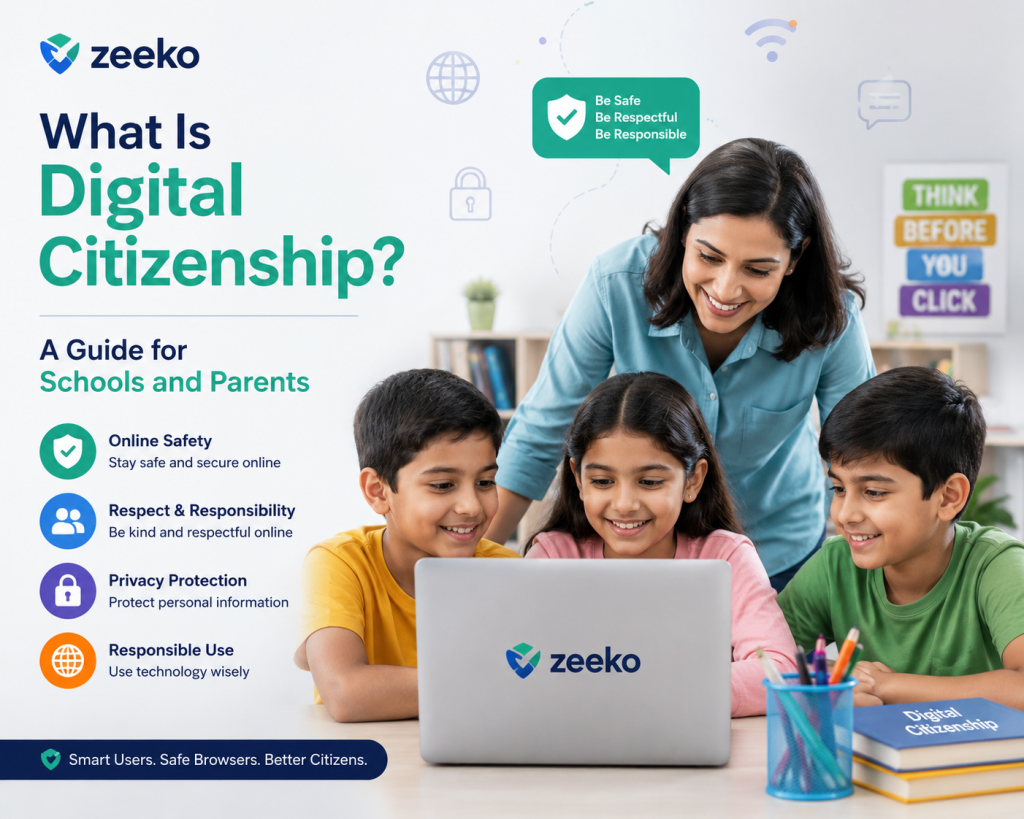
What is Digital Citizenship?
Digital citizenship refers to the ability to use technology and the internet in a safe, responsible, and ethical way.
In simple terms, it’s about:
- How we behave online
- How we interact with others digitally
- How we protect our information
- How we use digital tools responsibly
For students, digital citizenship is about learning how to become respectful and informed digital users, while for adults, it’s about guiding and modeling that behavior.
Why Digital Citizenship Matters Today?
The digital world is expanding rapidly, and children are exposed to it at younger ages than ever before. Without proper guidance, they may struggle to navigate it safely.
Here’s why digital citizenship is crucial:
1. Increased Screen Time
Students spend hours online for education, entertainment, and social interaction.
2. Exposure to Risks
Without proper online safety education, children may face:
- Cyberbullying
- Scams
- Inappropriate content
3. Digital Footprints
Everything posted online leaves a trace. Teaching responsible internet use helps students understand long-term consequences.
4. Academic and Career Impact
Colleges and employers often review online profiles. Good digital behaviour online can shape future opportunities.
Key Elements of Digital Citizenship
Understanding digital citizenship starts with breaking it into key components.
Online Safety Education
Students must learn how to:
- Identify safe and unsafe websites
- Avoid phishing and scams
- Recognize harmful online interactions
Example: A student receives a suspicious message asking for personal details. Knowing how to respond or not respond is a critical skill.
Responsible Internet Use
Responsible internet use means:
- Using technology for productive purposes
- Avoiding misuse such as cheating or plagiarism
- Respecting time limits
Example: Using AI tools for learning rather than copying answers blindly.
Digital Behaviour Online
How students behave online reflects their character.
This includes:
- Being respectful in comments and messages
- Avoiding cyberbullying
- Practicing empathy
Example: Choosing not to participate in online trolling or sharing hurtful content.
Privacy and Security Awareness
Students should understand:
- How to create strong passwords
- Why personal information must be protected
- The risks of oversharing
Example: Not posting location details or private photos publicly.
Digital Citizenship for Students: What They Need to Learn
Digital citizenship for students should focus on building practical, everyday skills.
Core Skills Students Should Develop
- Critical thinking when consuming online content
- Awareness of fake news and misinformation
- Safe communication practices
- Respect for digital ownership (copyright)
Real-Life Scenario
A student finds an article online and uses it in an assignment without credit. Teaching digital literacy helps them understand plagiarism and proper citation.
Role of Schools in Teaching Digital Literacy
Schools play a major role in shaping students’ digital habits.
How Schools Can Help
1. Integrate Digital Citizenship into Curriculum
- Include lessons on online safety education
- Use real-world examples
2. Train Teachers
Teachers need to understand digital trends and risks to guide students effectively.
3. Use Technology Responsibly
Encourage tools that promote learning rather than distraction.
4. Create Clear Policies
- Acceptable use policies
- Anti-cyberbullying guidelines
Role of Parents in Guiding Online Behavior
Parents are the first teachers of digital behaviour online.
What Parents Can Do?
1. Start Conversations Early
Talk openly about internet use and risks.
2. Set Boundaries
- Screen time limits
- Device-free zones
3. Monitor Without Spying
- Use parental controls wisely
- Build trust instead of fear
4. Lead by Example
Children copy adult behavior practice responsible internet use yourself.
Real-Life Example
If a parent constantly checks their phone during conversations, children may see that as acceptable behavior.
Common Risks in the Digital World
Understanding risks is key to teaching digital citizenship effectively.
1. Cyberbullying
- Harassment through messages or social media
- Emotional and psychological impact
2. Privacy Issues
- Data theft
- Identity misuse
3. Screen Addiction
- Reduced physical activity
- Poor sleep patterns
4. Exposure to Harmful Content
- Violent or inappropriate material
How to Teach Digital Citizenship Effectively?
Teaching digital citizenship requires consistency and practical engagement.
Effective Strategies
1. Use Real-Life Scenarios: Discuss situations students can relate to.
2. Encourage Open Discussions: Let students share their online experiences.
3. Teach Through Activities: Interactive learning improves retention.
4. Reinforce Positive Behavior: Reward responsible digital actions.
Practical Tips and Activities for Schools and Parents
For Schools
- Conduct workshops on online safety education
- Role-play scenarios (e.g., handling cyberbullying)
- Create student-led digital awareness campaigns
- Introduce “Digital Responsibility Week”
For Parents
- Create a family digital agreement
- Watch and discuss online content together
- Teach children how to report harmful behavior
- Encourage offline hobbies
Simple Activity Example
“Think Before You Post” Exercise
Ask students:
- Is it true?
- Is it kind?
- Is it necessary?
This builds awareness of digital behaviour online.
Challenges and Solutions
Challenge 1: Lack of Awareness
Solution: Provide training for teachers and parents.
Challenge 2: Rapidly Changing Technology
Solution: Stay updated with trends and tools.
Challenge 3: Resistance from Students
Solution: Use engaging and relatable teaching methods.
Challenge 4: Overuse of Devices
Solution: Balance online and offline activities.
FAQs About Ditial Citizenship
What is digital citizenship in simple terms?
Digital citizenship means using the internet safely, responsibly, and respectfully.
Why is digital citizenship important for students?
It helps students stay safe online, build positive relationships, and develop critical thinking skills.
How can schools teach digital citizenship?
By integrating it into lessons, creating policies, and promoting responsible internet use.
What role do parents play in digital citizenship?
Parents guide children’s online behavior, set boundaries, and model good habits.
What are examples of good digital behaviour online?
Being respectful, protecting personal information, and avoiding harmful content.
At what age should digital citizenship be taught?
As early as possible ideally when children first start using digital devices.
How can students stay safe online?
By using strong passwords, avoiding suspicious links, and not sharing personal information.
Conclusion
Digital citizenship is not just a concept it’s a life skill that every student needs in today’s connected world.
By focusing on online safety education, responsible internet use, and digital behaviour online, schools and parents can work together to raise confident, respectful, and informed digital users.
The responsibility is shared but the impact is lasting.
Call to Action
Start today:
- Schools: Integrate digital citizenship into your curriculum
- Parents: Begin open conversations at home
Together, we can create a safer and smarter digital future for our children.
Explore Zeeko’s Home Page to discover our mission on the About Us Page, innovative Phone Blocking System, and engaging Phoenix Quest 10 programme. We provide Internet Safety Seminars, the Zeeko Report Card, and the Magical Leaders Choose Country initiative, alongside insights from our Digital Trend Report. Stay connected with us on Facebook and Instagram for updates.