

What is TikTok?
We’re quite sure that most people are now aware of the social media platform TikTok. In recent years the platform has taken the world by storm. Aided by COVID-19 lockdowns, it’s now a common household name sitting right up there with Facebook, Instagram and Snapchat.
TikTok allows users to create, watch, and share 15-second to now 3-minute videos shot on mobile devices or webcams. With its personalized feeds, also known as a For You Page (FYP), the app is notable for its addictive quality and high levels of engagement, providing each user with a unique stream of videos based on what the algorithm believes the user will be most interested in to keep them on the platform for longer periods. Around 40% of all TikTok users are between 18 and 24. However, gaining access at a younger age is not as difficult as the platforms that preceded it. The minimum age to join the platform is 13. 56% of TikTok users are female and, on average, spend approx 45 minutes a day on the platform.
The Dangers of TikTok
TikTok is not considered to be completely safe for users, especially children. Like all social media platforms, we believe parents should be aware of potential risks to help protect their children.
- Over screen time
Given the platform's addictive nature, overuse and overscreen time is an obvious dangers of the platform. Screen time can have many physical and mental effects. Physically it can cause eye strain, headaches, neck and shoulder pain, and disrupted sleep patterns. Mentally it can cause depression, anxiety and poor self-esteem. As so many children are on TikTok, you can be sure it is a topic in many children’s friend groups both in and outside of school, causing a ‘fear of missing out’ (FOMO) for those not allowed on the platform.
2. Cyberbullying
If you think about the very nature of TikTok being the platform that encourages users to make unique videos in the hopes of going viral, you are essentially asking users to be vulnerable. Having the confidence to make a video and post it for the world to see is amazing. However, the TikTok comments section is a scary place. Other users with essentially no identity (it’s not a requirement of the platform to upload a profile picture or disclose your name) can leave nasty and mean comments on the videos of others. Videos can be shared in groups and across other platforms leaving the door open for cyberbullying.
3. Inappropriate trends
Along with trending sounds users use to go viral, various trending challenges are often inappropriate, especially for children. Here are some examples.
- The Door Kick Challenge: This inappropriate TikTok trend involves kids kicking their neighbour’s doors.
- Blackout Challenge: In this challenge, the users try to hold their breath for as long as possible.
- Fake tongue piercing: Encourages users to place a magnet at either side of their tongue to give the appearance they have their tongue pierced. Several children across the world were hospitalised for ingesting magnets.
4. Collection of user data
TikTok gathers information your kids share and what they have created but have not yet posted or shared. Listed below is the data that TikTok collects;
- your name, email, password, phone number, and location.
- the content of messages, when sent, received and read, and the user it was received and read by.
- text, images and videos on your clipboard.
- purchase information, including payment card numbers, billing and shipping addresses.
- a user's activities on other websites and apps or in stores, including the products or services purchased, online or in person.
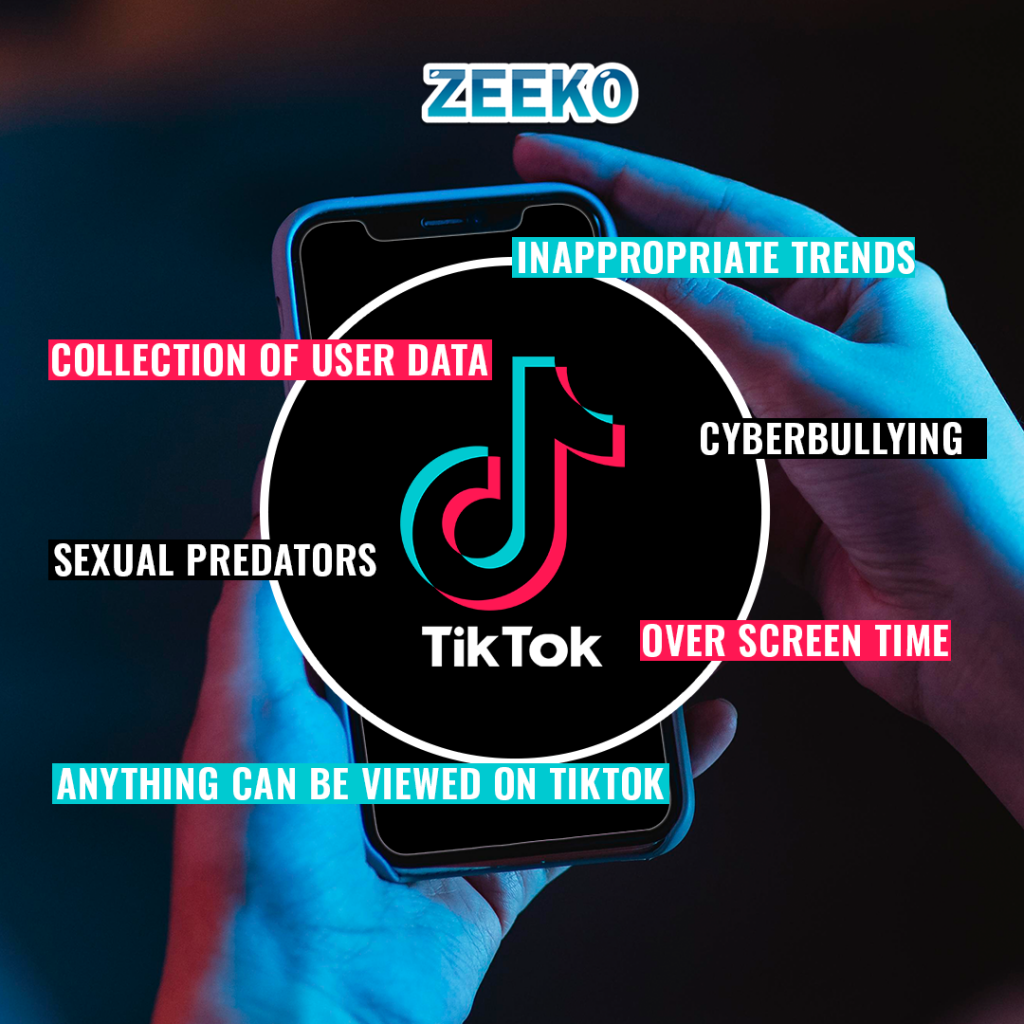
5. Sexual predators
Across all social media platforms, some sexual predators cause a potential threat to our children. This can happen because TikTok isn’t fully capable of verifying children's ages, so children are using the platform 13. Not every reported message or comment will be removed. Not every reported account will be blocked.
6. Anything can be viewed on TikTok
Unlike YouTube, where content can be age-restricted, anything can be viewed on TikTok. The platform doesn’t require you to log in to view the videos and content, with minimal restrictions around the type of content on the platform. Children are constantly susceptible to all types of inappropriate content.
How can we help children navigate TikTok safely?
Private mode
Use restricted mode
Manage Screen Time
Ensure your child’s account is private, not public. This will mean that your child will have to accept friend requests and will allow you to monitor their friends more easily.
This blocks mature content, but kids using the app might come across age-inappropriate videos even with the filter on. Lock the setting with a passcode.
You can manage your child’s screen time on their device through settings, allocating them a specific amount of time on their devices and the app. If you are doing this, we recommend locking it with a passcode so only you can change the settings.
Zeeko Education
At Zeeko, we are here to help you. We pride ourselves in helping parents and teachers across Ireland and further by providing information on Social Media, Internet Safety and Education. If you, as a parent, have any questions about social media and how to navigate it with your child, feel free to reach out to a member of our team.

Frequently Asked Questions (FAQs)
What are the main dangers of TikTok for children?
The main dangers of TikTok include excessive screen time, cyberbullying, exposure to inappropriate trends, data collection, contact with strangers or predators, and access to unsuitable content. These risks are especially concerning for younger users.
What is TikTok and why is it so popular with young people?
TikTok is a video-sharing social media platform where users create and watch short videos. Its personalised “For You Page” keeps users engaged by showing content based on their interests, making the app highly addictive for children and teenagers.
What age do you need to be to use TikTok?
The minimum age to join TikTok is 13 years, but age verification is limited. This means younger children can sometimes access the platform without proper checks.
How does TikTok’s algorithm affect children?
TikTok’s algorithm is designed to keep users on the app for longer by continuously showing content it thinks they will enjoy. This can lead to excessive screen time and make it difficult for children to step away from the app.
Is over screen time a real concern on TikTok?
Yes. One of the biggest dangers of TikTok is overscreen time. Too much time on the app can lead to physical issues like eye strain and poor sleep, as well as mental health concerns such as anxiety, low self-esteem, and depression.
Can children be cyberbullied on TikTok?
Yes. TikTok’s comment sections and sharing features can expose children to negative or harmful comments. Videos can also be shared outside the app, increasing the risk of cyberbullying.
What are some dangerous or inappropriate TikTok trends?
Some TikTok challenges encourage risky or inappropriate behaviour, such as the Blackout Challenge, Door Kick Challenge, or fake tongue-piercing trends. These can cause physical harm and emotional distress, particularly for children.
What personal data does TikTok collect?
TikTok collects a wide range of user data, including personal details, messages, clipboard content, purchase information, and activity across other apps and websites. This level of data collection is a major concern for parents.
Can strangers or predators contact children on TikTok?
Yes. Like many social media platforms, TikTok can expose children to unwanted contact from strangers, including potential predators. Not all reported messages or accounts are removed immediately.
Can children see inappropriate content on TikTok?
Yes. Unlike some platforms, TikTok content is not strictly age-restricted, and videos can be viewed without logging in. This means children may be exposed to inappropriate or harmful content.
How can parents help reduce the dangers of TikTok?
Parents can help by setting accounts to private, enabling restricted mode, managing screen time, and regularly talking to their child about online safety and responsible behaviour on social media.
Should a child’s TikTok account be private?
Yes. A private account allows children to control who follows them and who can interact with their content, helping to reduce exposure to strangers and harmful interactions.
Does restricted mode make TikTok safe for kids?
Restricted mode helps limit mature content but does not block everything. It should be used alongside parental supervision and regular conversations about online safety.
Is it better to ban TikTok or teach children to use it safely?
Social media is here to stay. Teaching children how to recognise risks and make smart choices online helps them develop essential digital safety skills for life.
How can Zeeko help parents with TikTok safety?
Zeeko supports parents and teachers by providing guidance on social media safety, internet awareness, and digital education, helping families navigate platforms like TikTok more safely.
Explore Zeeko’s Home Page to discover our mission on the About Us Page, innovative Phone Blocking System, and engaging Phoenix Quest 10 programme. We provide Internet Safety Seminars, the Zeeko Report Card, and the Magical Leaders Choose Country initiative, alongside insights from our Digital Trend Report. Stay connected with us on Facebook and Instagram for updates.