

How to Teach Digital Citizenship in Schools? Digital citizenship for students equips young people to navigate online spaces safely, ethically, and respectfully. As screens dominate daily life, schools must teach internet behaviour rules and responsible online use alongside traditional subjects, helping children thrive in a connected world.
Why Digital Citizenship Matters Now
Students encounter complex online challenges daily—from cyberbullying and privacy risks to misinformation and screen addiction. Digital citizenship for students builds lifelong habits, reducing harm while maximizing technology's benefits for learning and connection.
Research shows structured programs cut bullying by 25% and boost academic focus. Teaching these skills early prevents crises, fostering confident digital natives.
Core Elements of Digital Citizenship
Break it into nine key areas, adaptable by age:
- Digital Access: Ensure equitable tech use; discuss data poverty.
- Etiquette: Kind communication—no all-caps yelling or trolling.
- Law: Copyright basics; no plagiarism or piracy.
- Commerce: Spot scams; safe online shopping.
- Rights/Responsibilities: Privacy settings; respect others' data.
- Security: Strong passwords, phishing awareness, updates.
- Health/Wellness: Screen breaks; balance offline life.
- Literacy: Verify sources; fight fake news.
- Communication: Think before posting; impact of words.
Age-Appropriate Teaching Strategies
Primary (Ages 5-11): Basics and Kindness
Use stories and games:
- Role-play "What would you do?" scenarios (stranger messages).
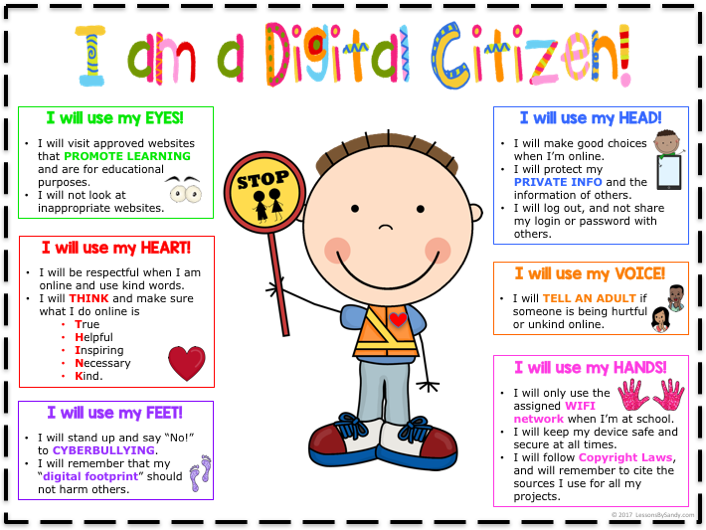
- Create class internet behaviour rules posters: "Pause before posting."
- Practice passwords with silly phrases.
- Weekly "unplugged" challenges.
Activity: Digital citizenship treasure hunt—find safe vs risky sites.
Secondary (Ages 12-18): Real Risks and Ethics
Shift to scenarios and debate:
- Analyze viral misinformation cases.
- Mock trials for cyberbullying.
- Privacy audits of social profiles.
- Guest speakers on sexting consequences.
Activity: "Digital footprint" project—Google yourselves, discuss fixes.
Practical Classroom Activities
- Netiquette Role-Play
Group skits: polite vs rude chats. Debrief on tone. - Source Sleuth Challenge
Verify news headlines; rate credibility. - Password Olympics
Compete creating unbreakable passwords. - Screen Time Audit
Track usage; set personal balance goals. - Empathy Mapping
"How does this post make the recipient feel?"
| Age Group | Focus Skills | Sample Activity |
|---|---|---|
| Primary | Kindness, basics | Emoji emotion matching |
| Junior | Privacy, bullying | Fake profile creation exercise |
| Senior | Ethics, footprints | Deepfake detection challenge |
Embed in School Culture
Internet behaviour rules work best integrated:
- Policies: Clear AUPs (Acceptable Use Policies) with student input.
- Curriculum: SPHE/PSHE slots; cross-subject links.
- Modelling: Teachers share positive examples.
- Parents: Workshops on home reinforcement.
- Monitoring: Tools flag risks without invading privacy.
Reward good citizenship—badges, shoutouts.
Common Challenges and Fixes
- Resistance: Frame as empowerment, not restriction.
- Time: 15-min weekly micro-lessons.
- Equity: Device-sharing stations.
- Trends: Update yearly (AI deepfakes, new apps).
Partner with experts for fresh content.
Tools and Resources
- Free curricula: Common Sense Education, Nearpod.
- Apps: Quizlet for netiquette flashcards.
- Videos: TED-Ed on digital empathy.
- Parent guides: NetSmartz, ConnectSafely.
Long-Term Impact
How to Teach Digital Citizenship in Schools? Schools teaching digital citizenship for students see:
- 40% drop in incidents.
- Better mental health.
- Higher tech confidence.
Responsible online use starts in classrooms—build it now for safer tomorrows.
Explore Zeeko’s Home Page to discover our mission on the About Us Page, innovative Phone Blocking System, and engaging Phoenix Quest 10 programme. We provide Internet Safety Seminars, the Zeeko Report Card, and the Magical Leaders Choose Country initiative, alongside insights from our Digital Trend Report. Stay connected with us on Facebook and Instagram for updates.