

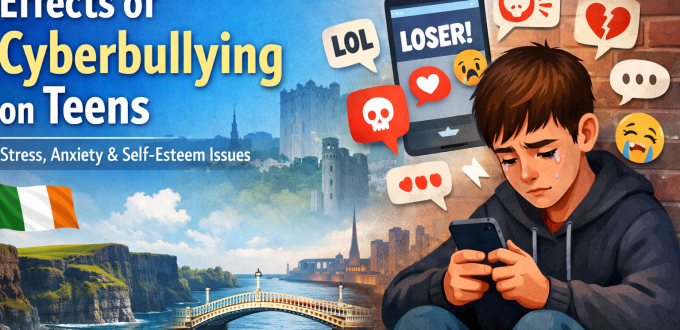
Introduction: Why Cyberbullying Is a Growing Concern for Teens
Teenagers today are growing up online. Social media, messaging apps, online games, and school platforms are a normal part of daily life in Ireland. While the internet helps teens learn, connect, and express themselves, it also has a darker side — cyberbullying.
Unlike traditional bullying, cyberbullying does not stop when school ends. It can follow a teen everywhere — into their bedroom, onto their phone, and even into their thoughts. Many parents underestimate what cyberbullying can cause, thinking it is “just online drama.” In reality, the effects of cyberbullying on teens can be serious, long-lasting, and sometimes life-changing.
This blog explains cyberbullying effects in simple language — from stress and anxiety to self-esteem issues and mental health risks — and why cyberbullying is dangerous for teens, especially in today’s always-connected world.
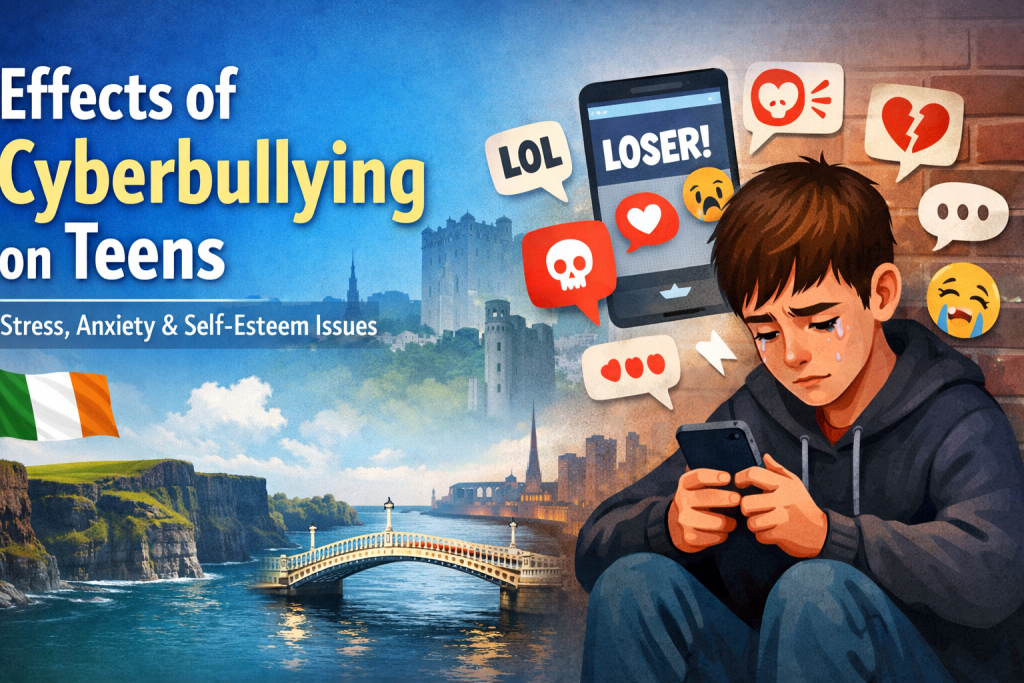
What is Cyberbullying?
Cyberbullying happens when someone uses digital platforms to hurt, threaten, embarrass, or target another person repeatedly. It can happen on WhatsApp, Snapchat, Instagram, TikTok, Facebook, Online gaming chats, School portals or group chats and Emails or text messages.
Cyberbullying may include:
- Sending abusive or threatening messages
- Spreading rumours or lies online
- Sharing private photos without consent
- Posting humiliating comments publicly
- Excluding someone intentionally from online groups
- Impersonating someone to damage their reputation
For teens, even one post or message can feel overwhelming — especially when it spreads fast and feels impossible to escape.
When Can Cyberbullying Happen?
One of the scariest things about cyberbullying is when it can happen — which is anytime.
Cyberbullying can occur: During school hours, Late at night, On weekends or holidays, During online classes, While gaming with friends and After breakups or friendship conflicts. Because phones are always nearby, teens never truly get a break. This constant exposure increases emotional pressure and stress, making cyberbullying far more damaging than many adults realise.
Why Cyberbullying is a Problem for Teens?
1. It Feels Inescapable: Traditional bullying often ends when a teen goes home. Cyberbullying does not. Hurtful messages can be read again and again, screenshots can be shared, and posts can go viral. This makes teens feel: trapped, powerless, constantly watched and Afraid to open their phone. That’s one major reason why cyberbullying is a problem in modern society.
2. It Happens in Public: Online bullying is often visible to classmates, strangers, or entire communities. Public humiliation can be devastating for teens who are still developing confidence and identity. Even one embarrassing post can damage reputation, lead to social isolation and create long-term emotional scars.
Effects of Cyberbullying on Teens
Let’s look at the real-life effects of cyberbullying on teens, explained simply and honestly.
1. Stress and Anxiety
One of the earliest cyberbullying effects is stress. Teens who are cyberbullied often feel nervous checking their phone, worry about what people are saying, feel tense, restless, or on edge and experience panic or fear without knowing why. Over time, this stress can turn into anxiety, affecting school performance, friendships, and sleep.
2. Low Self-Esteem and Loss of Confidence
Repeated online attacks can slowly break down a teen’s self-worth. Cyberbullying can make teens believe “I’m not good enough”, “Everyone hates me”, “Something is wrong with me”. This is one of the most damaging effects of cyberbullying on teens, as low self-esteem can follow them into adulthood.
Teens may:
- Stop expressing themselves
- Avoid social situations
- Lose confidence in their abilities
- Constantly compare themselves to others
3. Depression and Emotional Pain
Long-term cyberbullying can lead to depression. Signs may include persistent sadness, loss of interest in hobbies, crying easily, feeling hopeless or numb and withdrawing from family and friends. Many teens suffer in silence because they feel embarrassed or fear things will get worse if they speak up.
4. Sleep Problems and Physical Symptoms
Cyberbullying does not just affect emotions — it can impact the body too. Teens may experience: trouble sleeping or insomnia, nightmares, headaches, stomach aches, fatigue and loss of appetite. Stress from bullying keeps the body in a constant “alert mode,” which is unhealthy over time.
5. Poor Academic Performance
When a teen is emotionally distressed, learning becomes difficult. Cyberbullying can cause difficulty concentrating, falling grades, skipping school, avoiding online classes and loss of motivation. Some teens fear encountering bullies online through school platforms, making education feel unsafe.
6. Social Withdrawal and Isolation
To protect themselves, many teens pull away socially. They may stop using social media, avoid friends, isolate themselves in their room and avoid group activities or sports. While this may seem like a coping strategy, isolation often makes emotional pain worse.
7. Self-Harm and Suicidal Thoughts
In severe cases, cyberbullying can push teens toward self-harm or suicidal thoughts. Not every bullied teen reaches this stage, but the risk increases when bullying is persistent, public, humiliating and combined with isolation or depression. This is why cyberbullying must always be taken seriously — even if it seems “minor” to adults.
Can Cyberbullying Be a Crime in Ireland?
Yes — cyberbullying can be a crime in Ireland depending on the behaviour.
Under Irish law:
- Online harassment
- Threatening messages
- Sharing intimate images without consent
- Repeated abusive communication
can lead to legal consequences under laws such as the Harassment, Harmful Communications and Related Offences Act (Coco’s Law). This law exists to protect people — especially young individuals — from serious online harm. Parents and teens should know that cyberbullying is not “just online behaviour.” In some cases, it is illegal.
Why Teens Don’t Always Speak Up?
Many teens stay silent because:
- They fear retaliation
- They worry phones will be taken away
- They feel ashamed
- They think adults won’t understand
- They believe nothing will change
Creating a safe, supportive environment is essential so teens feel comfortable asking for help.
How Parents and Schools in Ireland Can Help?
For Parents:
- Talk openly about online life
- Listen without judgement
- Reassure your teen it’s not their fault
- Save evidence of bullying
- Report serious cases to schools or authorities
For Schools:
- Promote digital safety education
- Encourage reporting
- Take complaints seriously
- Support both victims and prevention programs
Early intervention can reduce long-term harm.
Taking Cyberbullying Seriously
The effects of cyberbullying on teens go far beyond hurt feelings. From stress and anxiety to self-esteem issues and mental health risks, cyberbullying can deeply affect a young person’s life. Understanding what cyberbullying can cause is the first step toward prevention, awareness, and support. In Ireland and around the world, protecting teens online is no longer optional — it is essential. When teens feel heard, supported, and protected, they are far more likely to recover, grow, and thrive.
Frequently Asked Questions
What are the main effects of cyberbullying on teens?
The main effects include stress, anxiety, low self-esteem, depression, sleep problems, poor academic performance, and social withdrawal.
Why cyberbullying is a problem for teenagers?
Cyberbullying is a problem because it is constant, public, and difficult to escape, which increases emotional harm and mental health risks.
When can cyberbullying happen?
Cyberbullying can happen anytime — day or night, during school, weekends, holidays, or while gaming or using social media.
Why is cyberbullying dangerous for teen mental health?
Teen brains are still developing. Cyberbullying can affect confidence, identity, emotional stability, and increase risks of depression and self-harm.
Can cyberbullying be a crime in Ireland?
Yes. Certain forms of cyberbullying, such as harassment or sharing private images, are crimes under Irish law.
What should a teen do if they are being cyberbullied?
They should tell a trusted adult, save evidence, block the bully, and seek help from school authorities or support organisations.
How can parents help prevent cyberbullying?
By maintaining open communication, educating teens about online safety, monitoring digital behaviour respectfully, and acting quickly when issues arise.
Explore Zeeko’s Home Page to discover our mission on the About Us Page, innovative Phone Blocking System, and engaging Phoenix Quest 10 programme. We provide Internet Safety Seminars, the Zeeko Report Card, and the Magical Leaders Choose Country initiative, alongside insights from our Digital Trend Report. Stay connected with us on Facebook and Instagram for updates.