

Cyberbullying Effects on Children and Teens | What Parents in Ireland Need to Know?
The internet has become a normal part of everyday life for children and teenagers. From online classes and homework to social media, gaming, and chatting with friends, young people today are more connected than ever before. While this digital world offers many benefits, it also brings serious risks. One of the biggest concerns facing families today is cyberbullying.
Understanding the cyberbullying effects on children is extremely important, especially for parents and educators in Ireland. Cyberbullying is not “just online teasing.” It can deeply affect a child’s mental health, confidence, education, and even their safety.
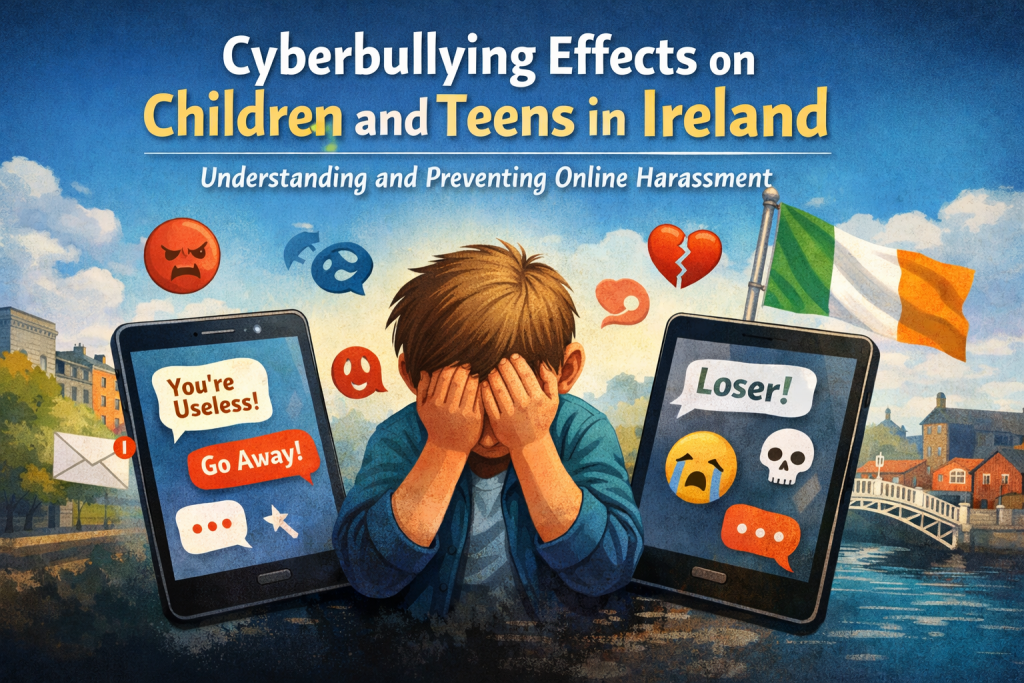
In this blog, we will explain in simple language what cyberbullying is, what cyberbullying can cause, why cyberbullying is a problem, why cyberbullying is dangerous, and when cyberbullying can happen. We will also discuss cyberbullying laws in Ireland, answer the question “can cyberbullying be a crime?”, and share practical ways to protect children and teens.
What is Cyberbullying?
Cyberbullying is when someone uses digital platforms to hurt, threaten, embarrass, or harass another person. Unlike traditional bullying, cyberbullying happens online and can follow a child everywhere.
Cyberbullying can happen through:
- Social media platforms like Instagram, TikTok, Snapchat, or Facebook
- Messaging apps such as WhatsApp or Messenger
- Online games and gaming chats
- Emails or group chats
- Fake profiles or anonymous accounts
Examples of cyberbullying include:
- Sending threatening or abusive messages
- Spreading rumours or lies online
- Posting embarrassing photos or videos
- Excluding someone from online groups
- Impersonating someone to damage their reputation
Why Cyberbullying is a Problem?
Many people think cyberbullying is not as serious as face-to-face bullying. This is a dangerous misunderstanding.
- It can happen 24/7, not just at school
- Hurtful content can be shared with hundreds of people instantly
- Messages and images can be difficult to remove
- Bullies often hide behind fake or anonymous profiles
- Victims may feel they cannot escape
Because children spend so much time online, cyberbullying can feel overwhelming and inescapable.
When Can Cyberbullying Happen?
One of the most frightening things about cyberbullying is that it can happen at any time.
- During school hours
- Late at night when children should feel safe
- During weekends or holidays
- While playing online games
- Even while sitting at home with family
Unlike traditional bullying, cyberbullying does not stop when a child leaves school. The phone or tablet becomes a constant reminder.
Cyberbullying Effects on Children and Teens
The cyberbullying effects on children can be emotional, mental, physical, and social. These effects often last much longer than adults realise.
1. Emotional and Mental Health Effects
One of the most serious cyberbullying effects is damage to a child’s emotional well-being.
Children who experience cyberbullying may:
- Feel sad, anxious, or angry
- Lose confidence and self-esteem
- Feel embarrassed or ashamed
- Become withdrawn or quiet
- Feel hopeless or helpless
Over time, these emotions can lead to: Depression, Severe anxiety, Panic attacks and Self-harm thoughts. This shows clearly what cyberbullying can do to a child’s mental health.
2. Impact on School Performance
Cyberbullying does not stay online—it follows children into the classroom.
What cyberbullying can cause in education:
- Difficulty concentrating in class
- Falling grades
- Loss of interest in school
- Increased absenteeism
- Fear of classmates or teachers
Some children may even refuse to attend school because they are afraid of facing the people behind the bullying.
3. Physical Health Effects
Emotional stress often leads to physical problems.
Common physical signs include:
- Headaches
- Stomach aches
- Sleep problems
- Changes in eating habits
- Fatigue
Parents in Ireland should be alert to these warning signs, especially when no medical cause is found.
4. Social Isolation
Cyberbullying can destroy friendships and social confidence.
Children may:
- Stop using social media
- Avoid friends and family
- Feel lonely and disconnected
- Lose trust in others
This isolation makes the effects even worse and can trap children in silence.
5. Long-Term Effects into Adulthood
The effects of cyberbullying do not always stop when childhood ends.
Long-term cyberbullying effects on children can include:
- Ongoing mental health issues
- Low self-confidence as adults
- Difficulty forming relationships
- Fear of online communication
This is why early intervention is so important.
Why Cyberbullying is Dangerous?
Many parents ask, “Is cyberbullying really that dangerous?” The honest answer is yes.
- Victims may feel trapped with no escape
- Online abuse can escalate quickly
- Humiliation is often public and permanent
- Children may blame themselves
- In extreme cases, cyberbullying has been linked to self-harm and suicide
Understanding why cyberbullying is dangerous helps adults take it seriously and act quickly.
Can Cyberbullying Be a Crime in Ireland?
Yes. Can cyberbullying be a crime? In Ireland, the answer is increasingly yes, depending on the behaviour.
What Are Cyberbullying Laws in Ireland?
Ireland has taken important steps to address online abuse.
Key cyberbullying laws include:
- Harassment laws: Repeated online abuse can be considered harassment
- The Harassment, Harmful Communications and Related Offences Act 2020 (Coco’s Law)
- Makes it illegal to share intimate images without consent
- Covers threatening or grossly offensive online messages
Under Irish law, serious cyberbullying cases can lead to:
- Garda involvement
- Fines
- Criminal charges
So, can cyberbullying be a crime? Yes—especially when it involves threats, harassment, or harmful communication.
What Cyberbullying Can Cause If Ignored
Ignoring cyberbullying is never the right option.
If left unaddressed, what cyberbullying can cause includes:
- Worsening mental health
- Long-term trauma
- Academic failure
- Risky behaviour
- Permanent emotional damage
Silence often protects the bully, not the child.
How Parents in Ireland Can Help Prevent Cyberbullying?
Parents play a vital role in protecting children.
- Talk openly about online experiences
- Encourage children to report bullying
- Set clear rules for internet use
- Monitor social media activity (age-appropriate)
- Teach kindness and empathy online
What to Do If Your Child is Being Cyberbullied?
If you suspect cyberbullying:
- Stay calm and listen
- Save evidence (screenshots, messages)
- Report the behaviour to the school or platform
- Block and report the bully online
- Seek professional support if needed
Schools in Ireland are increasingly trained to handle cyberbullying cases seriously.
Teaching Children Digital Safety
Children need guidance, not fear. Teach them:
- Never share personal information
- Think before posting
- Report harmful content
- Support friends who are bullied
- Understand that online actions have real-life consequences
Conclusion: Protecting Children from Cyberbullying
The cyberbullying effects on children are real, serious, and long-lasting. Understanding why cyberbullying is a problem, why cyberbullying is dangerous, and what cyberbullying can do helps parents and educators take action early.
In Ireland, awareness, strong communication, and legal support are improving—but children still need adults to guide, protect, and support them.
A safe online environment starts with informed parents and caring communities.
FAQs: Cyberbullying Effects on Children and Teens
What are the main cyberbullying effects on children?
The main effects include anxiety, depression, low self-esteem, poor school performance, and social withdrawal.
When can cyberbullying happen most often?
Cyberbullying can happen at any time—day or night—especially on social media, messaging apps, and online games.
Why cyberbullying is a problem for teens in Ireland?
Because teens spend a lot of time online, cyberbullying can feel constant and overwhelming, affecting mental health and education.
Can cyberbullying be a crime in Ireland?
Yes. Serious cases can be criminal offences under Irish harassment and harmful communications laws.
What are cyberbullying laws in Ireland?
Ireland has laws like Coco’s Law that address harmful online communication, harassment, and image-based abuse.
What cyberbullying can cause if ignored?
Ignored cyberbullying can lead to long-term mental health problems, trauma, and academic failure.
Why cyberbullying is dangerous compared to traditional bullying?
It can happen constantly, reach a wide audience, and leave permanent digital evidence.
What should parents do first if their child is cyberbullied?
Listen calmly, save evidence, report the issue, and seek support from schools or professionals.
Explore Zeeko’s Home Page to discover our mission on the About Us Page, innovative Phone Blocking System, and engaging Phoenix Quest 10 programme. We provide Internet Safety Seminars, the Zeeko Report Card, and the Magical Leaders Choose Country initiative, alongside insights from our Digital Trend Report. Stay connected with us on Facebook and Instagram for updates.