

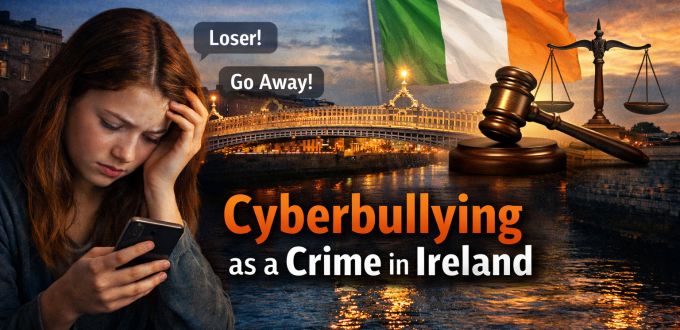
In today’s digital age, where almost everyone uses smartphones, social media, and online platforms, our lives are more connected than ever. But this connectivity comes with risks — one of the most serious being cyberbullying. For people in Ireland and around the world, questions like “can cyberbullying be a crime?” and “when can cyberbullying happen?” are increasingly important.
In this blog, we’ll break down in simple language:
- What cyberbullying is
- Why cyberbullying is a problem
- Cyberbullying effects on individuals and communities
- What cyberbullying can cause in real life
- Whether cyberbullying can be a crime in Ireland
- How the law treats online harassment
By the end, you’ll have a clearer understanding of how the law works and what you can do if someone is being harassed online.
What is Cyberbullying?
At its core, cyberbullying means using digital technology — like social media, messaging apps, online games, or email — to intentionally harm someone emotionally, mentally, or socially. It’s similar to traditional bullying, but it happens online or through electronic devices.
Examples include:
- Sending hurtful messages
- Posting embarrassing photos or videos
- Spreading rumours online
- Excluding someone from group chats or social platforms
- Impersonating someone to damage their reputation
Cyberbullying can occur 24/7, which makes it different from traditional bullying on school grounds or in the playground.
When Can Cyberbullying Happen?
Unlike traditional bullying that usually happens in person and at certain times (like during school), cyberbullying can happen anytime and anywhere as long as there’s internet access. Here are some common moments when cyberbullying can occur:
- During late-night usage: Many teens and adults use social media late at night, which can be a peak time for hurtful messages.
- After arguments or fights: Hurtful messages can continue online long after a disagreement in person.
- In gaming communities: Players may be targeted with abuse through chat or voice messages.
- Group chats and social networks: Exclusion or harassment can happen in private or public online groups.
Because the internet never sleeps, cyberbullying can happen at school, at home, or while travelling — anytime a device is online.
Why Cyberbullying Is a Problem
Cyberbullying isn’t just “kids being kids” — it is a serious issue with real consequences for individuals and communities. Here’s why cyberbullying is a problem:
1. It’s Persistent: Once something is posted online, it can’t always be fully removed. Hurtful messages, photos, or videos can stay online for a long time — exposing someone repeatedly to shame or embarrassment.
2. It Can Reach Many People Fast: In the digital world, one post can be shared hundreds or thousands of times within minutes. This amplifies the harm caused.
3. The Bully Can Be Anonymous: Many cyberbullies hide behind fake accounts, making it harder to identify them and stop the behaviour.
4. It’s Hard to Escape: Unlike in a physical space, where someone might avoid bullies by going home, online harassment can follow a person everywhere — even into their bedroom.
5. It Affects Vulnerable Groups More: Young people, especially teens, are heavy users of social media and are particularly affected — but older adults, employees, and public figures can also be victims.
Cyberbullying Effects: What Happens to the Victim?
Cyberbullying effects can be wide-ranging and extremely serious. These effects aren’t just emotional — they can influence mental health, physical health, social life, and even future opportunities. Here’s what cyberbullying can cause:
1. Emotional and Mental Health Issues
Victims may experience:
- Anxiety
- Depression
- Fear or stress
- Feeling worthless or rejected
2. Decline in Academic or Work Performance
Students might avoid school or fall behind in their studies. Adults may struggle to focus at work.
3. Social Withdrawal
Victims may avoid social interaction, stop using online platforms, or isolate themselves from friends and family.
4. Physical Health Symptoms
Stress from cyberbullying can lead to:
- Headaches
- Sleep problems
- Loss of appetite
- Fatigue
5. Long-Term Psychological Impact
In severe cases, prolonged cyberbullying can contribute to self-harm or suicidal thoughts — especially among teens.
Why Cyberbullying Is Dangerous for Teenagers?
Teens are among the most vulnerable when it comes to online harassment — and there’s a reason for that:
1. Teen Brains Are Still Developing: Young people are still building emotional resilience. Negative comments online can hit harder and be harder to manage.
2. Social Acceptance Matters More: Teens place high value on peer approval. Being excluded, mocked, or embarrassed online can feel like the end of the world.
3. Constant Online Presence: Many teens are online every day — in class, at home, and with friends — making it easier for harassment to follow them everywhere.
4. Limited Coping Skills: Teens might not yet have the tools to deal with online stress and often suffer in silence.
Can Cyberbullying Be a Crime?
One of the most important questions many people ask is: “Can cyberbullying be a crime?” The short answer is yes — in many cases, cyberbullying can be a crime, especially when it involves behaviour that breaks specific laws.
However, not all bad online behaviour is criminal. So let’s break this down.
When Does Cyberbullying Become a Crime?
Whether cyberbullying is a crime depends on what exactly happened and how severe the behaviour was. In Ireland, there are several laws that can apply to harmful online behaviour.
Here’s how the law can treat cyberbullying:
1. Harassment: If someone persistently targets another person with unwanted messages or conduct, it may count as harassment. Under Irish law, harassment (online or offline) can be illegal — especially if it causes the victim fear, distress, or harm.
2. Threats or Intimidation: Sending someone messages that threaten violence or harm can be a crime. Threatening to hurt someone, damage their reputation, or revealing personal information (doxxing) can all lead to legal action.
3. Defamation: Posting false statements that harm someone’s reputation can be illegal under defamation laws.
4. Cyberstalking: Repeated, targeted behaviour that makes someone feel scared or unsafe may be treated as stalking — online or in person.
5. Hate Speech: If online abuse targets someone based on race, religion, gender, sexual orientation, disability, or other protected characteristics, it may be a criminal offence under hate speech laws.
6. Child Protection Laws: If the victim or the perpetrator is under 18, there are additional protections. Sharing explicit images of someone under 18 — even if it’s consensual — is illegal.
Irish Laws That Can Apply to Cyberbullying
In Ireland, there isn’t one single “cyberbullying law.” Instead, different laws protect people from online harassment or abuse.
Some key legal areas include:
1. Non-Fatal Offences Against the Person Act
This can apply to threats, harassment, or stalking that causes fear or distress.
2. Defamation Law
Hurting someone’s reputation with false online statements can lead to civil action (and sometimes criminal charges in serious cases).
3. Harassment, Harmful Communications and Related Offences Act 2020
This law was created to specifically address harmful online behaviour. It makes it an offence to send or post threatening, abusive, or insulting messages if you know it will cause harm.
Under this act, it’s possible to face criminal charges if someone:
- Repeatedly messages you
- Posts harmful content about you
- Shares private information without consent
This is key: The act recognises online harassment and some forms of cyberbullying as criminal offences in Ireland.
What Happens If Someone Is Charged With Cyberbullying?
If someone’s behaviour meets the legal threshold — meaning it’s serious, targeted, and harmful — there are several possible outcomes:
1. Legal Investigation
Law enforcement can investigate complaints of online harassment.
2. Charges and Court
If there’s enough evidence, the person may be charged and face court proceedings.
3. Penalties
Penalties can include:
- Fines
- Community service
- Orders to stop contacting the victim
- In severe cases, imprisonment
4. Civil Actions
Even if there’s no criminal charge, victims can pursue civil action for defamation or harassment.
What Should You Do if You Are a Victim?
Being targeted online can feel scary and overwhelming. If you or someone you know is being cyberbullied:
1. Don’t Blame Yourself: Cyberbullying says more about the person doing it than the person receiving it.
2. Save the Evidence: Take screenshots and save messages — these may be important if you need to report the behaviour.
3. Block or Report: Use in-app tools to block or report the person on social media or messaging platforms.
4. Tell Someone You Trust: Talk to a friend, family member, teacher, or counsellor.
5. Report to Authorities: If the messages include threats, hate speech, or sexual content, consider reporting to Gardaí (Irish police) or a trusted adult.
Why more people aren’t reporting Cyberbullying?
Many victims don’t report online harassment. Some reasons include:
- Fear of retaliation
- Belief the behaviour isn’t serious enough
- Not knowing where to report
- Feeling embarrassed
But reporting cyberbullying — especially when it’s criminal — is important for your safety and for stopping the behaviour.
FAQs About Cyberbullying and the Law
Can cyberbullying be a crime in Ireland?
Yes — under Irish law, certain forms of cyberbullying that involve harassment, threats, or harmful communications can be treated as criminal offences. Laws like the Harassment, Harmful Communications and Related Offences Act 2020 address online harassment.
What cyberbullying can cause someone to be charged?
Persistent harassment, threats, hate speech, sharing private images without consent, or false statements that damage reputation can all lead to legal action.
Why cyberbullying is dangerous for teens?
Teens are more vulnerable online because social acceptance matters deeply, they use platforms often, and their emotional coping skills are still developing. Cyberbullying can lead to anxiety, depression, social withdrawal, and even self-harm.
When can cyberbullying happen?
Cyberbullying can happen anytime — on social networks, chats, gaming platforms, forums, or via text messages. Because it’s online, it can happen 24/7.
What cyberbullying effects should parents watch for?
Look for changes in mood, sleep patterns, school performance, social behaviour, and reluctance to use devices.
Is it enough to just block someone?
Blocking helps stop the immediate contact, but serious online harassment should be documented and reported to authorities or platform moderators.
What should I do if someone posts nude images of me without consent?
In Ireland, sharing intimate images without consent is illegal. Save evidence, report to the platform, and contact Gardaí. Seek support from a trusted adult or counsellor.
Conclusion
Cyberbullying is more than rude messages or online gossip — it’s a serious issue with lasting cyberbullying effects on mental health, safety, and quality of life. Why cyberbullying is a problem goes beyond hurt feelings; it can damage self-esteem, relationships, and, in severe cases, lead to legal consequences.
The good news is that yes — cyberbullying can be a crime in Ireland when the behaviour crosses legal lines like harassment, threats, or harmful communications. The law increasingly recognises online harm and provides tools to protect victims and hold offenders accountable.
Understanding these laws and knowing your rights can help you stay safe, support others, and make the internet a more respectful place for everyone.
Explore Zeeko’s Home Page to discover our mission on the About Us Page, innovative Phone Blocking System, and engaging Phoenix Quest 10 programme. We provide Internet Safety Seminars, the Zeeko Report Card, and the Magical Leaders Choose Country initiative, alongside insights from our Digital Trend Report. Stay connected with us on Facebook and Instagram for updates.