

What Cyberbullying Can Lead To? and How Early Intervention Helps
In today’s connected world, the internet is a huge part of everyday life in Ireland. Children and teenagers use phones, tablets, and laptops for schoolwork, socialising, gaming, and entertainment. While technology brings many benefits, it also has a darker side — cyberbullying.
Many parents, teachers, and even young people themselves don’t realise the consequences of cyberbullying until serious damage has already been done. What may seem like “just online teasing” can grow into something deeply harmful if ignored. This blog explains what cyberbullying can lead to, why it is a serious problem, and how early intervention can make a powerful difference.
Understanding Cyberbullying in Simple Terms
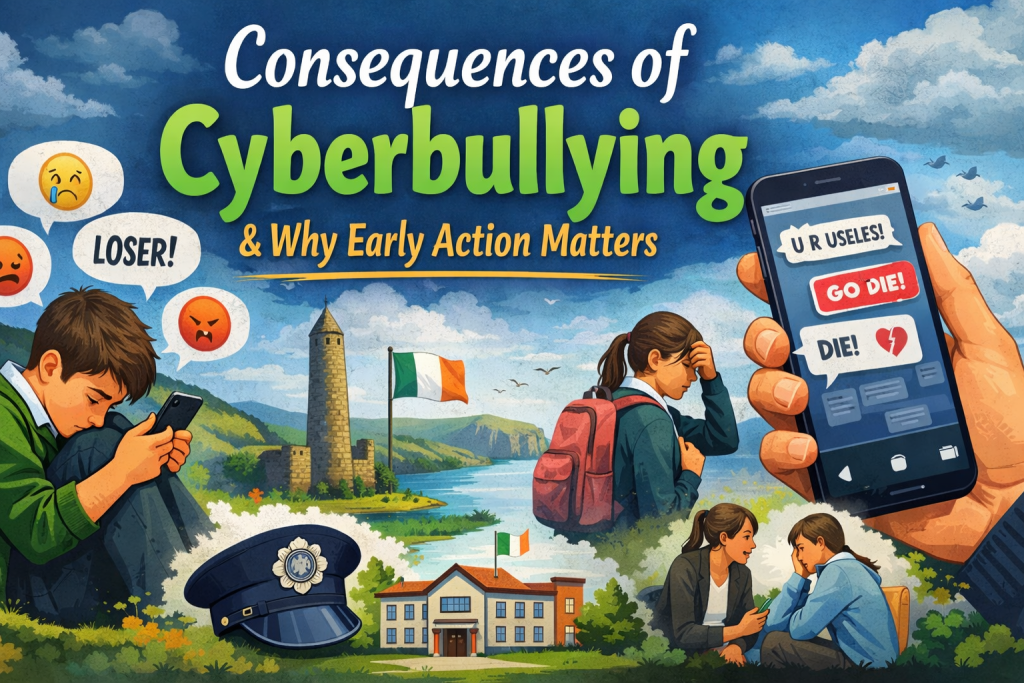
Cyberbullying happens when someone uses digital platforms — such as social media, messaging apps, online games, or emails — to hurt, threaten, embarrass, or target another person repeatedly.
Unlike traditional bullying, cyberbullying:
- Can happen anytime, anywhere
- Can spread very fast
- Often feels impossible to escape
- Leaves digital evidence that can haunt victims
This is why many experts say cyberbullying is more emotionally damaging than face-to-face bullying.
When Can Cyberbullying Happen?
One of the most worrying aspects is when cyberbullying can happen — the answer is almost anytime.
It can occur:
- After school hours
- Late at night
- During weekends or holidays
- While playing online games
- On group chats meant for friends or classmates
Because phones are always nearby, victims may feel they are never safe, even in their own homes.
The Real Consequences of Cyberbullying
The consequences of cyberbullying are not small or temporary. They affect mental health, emotional wellbeing, physical health, education, and even future opportunities.
Let’s look at the major effects in detail.
1. Emotional and Mental Health Damage
One of the most serious cyberbullying effects is harm to mental health.
Victims often experience:
- Anxiety
- Depression
- Low self-esteem
- Constant fear or worry
- Feelings of shame or guilt
Teenagers may start believing the negative messages they receive. Over time, this emotional pain can become overwhelming.
In Ireland, schools and mental health professionals report that cyberbullying is increasingly linked to:
- Panic attacks
- Emotional withdrawal
- Self-harm thoughts
2. Loss of Confidence and Self-Worth
Cyberbullying attacks a person’s identity. Hurtful comments about looks, intelligence, accent, background, or lifestyle can deeply affect how young people see themselves.
Victims may:
- Stop participating in class
- Avoid sharing opinions
- Feel “not good enough”
- Lose trust in friendships
Once confidence is damaged, it can take years to rebuild.
3. Social Isolation and Loneliness
Another major part of what cyberbullying can cause is social isolation.
Victims may:
- Stop using social media
- Avoid friends
- Feel embarrassed to speak up
- Fear being judged
Ironically, the internet — meant to connect people — becomes a place of fear. This loneliness can be especially hard for teens who rely on peer relationships for emotional support.
4. Decline in School Performance
Cyberbullying doesn’t stay online — it follows students into classrooms.
Common effects include:
- Trouble concentrating
- Falling grades
- Skipping school
- Loss of interest in learning
Some students in Ireland even change schools to escape online harassment. Education should be a place of growth, not fear.
5. Sleep Problems and Physical Symptoms
The mind and body are closely connected. Ongoing cyberbullying can lead to physical symptoms such as:
- Headaches
- Stomach aches
- Fatigue
- Sleep disorders
Late-night messages or fear of notifications can prevent proper rest, making everything feel worse the next day.
6. Risk of Self-Harm and Suicidal Thoughts
One of the most heartbreaking consequences of cyberbullying is its link to self-harm and suicidal thoughts, especially among teenagers.
Feeling trapped, humiliated, and powerless can push young people into dark emotional places. This is why cyberbullying must never be ignored or minimised.
Why Cyberbullying is a Problem in Today’s World?
So, why cyberbullying is a problem now more than ever?
Because:
- Children are online at younger ages
- Social media pressures are growing
- Online anonymity reduces accountability
- Harmful content spreads quickly
Digital platforms often blur the line between “joking” and abuse, making it harder for victims to speak up.
Why Cyberbullying is Dangerous for Teenagers?
Teen years are critical for emotional and social development. This is exactly why cyberbullying is dangerous for teen mental health.
Teenagers:
- Are still forming their identity
- Feel peer pressure more strongly
- May not have coping skills yet
- Often hesitate to tell adults
A single viral post or group chat attack can feel like the entire world is against them.
Can Cyberbullying Be a Crime in Ireland?
Many people ask: can cyberbullying be a crime?
In Ireland, certain forms of cyberbullying are illegal, especially when they involve:
- Harassment
- Threats
- Sharing private images without consent
- Hate speech
- Persistent online stalking
Irish law, including the Harassment, Harmful Communications and Related Offences Act (Coco’s Law), addresses serious online abuse. This shows that cyberbullying is not just “kids being kids” — it can have legal consequences.
How Early Intervention helps stop the damage?
The good news is that early intervention can change everything.
When cyberbullying is identified and addressed early:
- Emotional damage is reduced
- Confidence can be restored
- Situations are easier to resolve
- Long-term trauma is prevented
Early action saves mental health, relationships, and sometimes lives.
Signs That a Child or Teen May Be Cyberbullied
Early intervention starts with awareness. Warning signs include:
- Sudden mood changes
- Avoiding devices or obsessively checking them
- Withdrawal from family or friends
- Drop in school performance
- Trouble sleeping
- Emotional outbursts
These signs should never be ignored.
What Parents Can Do Early On?
Parents play a crucial role in prevention and support.
Helpful steps include:
- Keeping communication open
- Listening without judgement
- Encouraging children to talk
- Saving evidence of cyberbullying
- Contacting schools when needed
- Teaching safe online behaviour
Most importantly, children must feel believed and supported.
How Schools can Intervene Effectively?
Irish schools increasingly recognise their role in online safety.
Effective school actions include:
- Clear anti-bullying policies
- Digital citizenship education
- Anonymous reporting systems
- Counselling support
- Parent-teacher collaboration
When schools act quickly, situations rarely escalate.
Final Thoughts: Acting Early Makes All the Difference
The consequences of cyberbullying are real, serious, and long-lasting. What starts as online cruelty can grow into emotional trauma, academic failure, and serious mental health issues.
But there is hope.
With early intervention, understanding adults, supportive schools, and informed teens, cyberbullying can be stopped before it causes deep harm.
In Ireland and beyond, awareness, empathy, and timely action are the strongest tools we have.
Frequently Asked Questions
What are the main consequences of cyberbullying?
The main consequences of cyberbullying include anxiety, depression, low self-esteem, social isolation, poor academic performance, and in severe cases, self-harm or suicidal thoughts.
When can cyberbullying happen most often?
Cyberbullying can happen at any time — after school, late at night, during holidays, or while gaming or using social media.
Why is cyberbullying a problem for teenagers?
Cyberbullying is dangerous for teens because they are emotionally vulnerable, still developing confidence, and may struggle to cope with online abuse alone.
Can cyberbullying be a crime in Ireland?
Yes. Certain forms of cyberbullying are illegal in Ireland under laws such as Coco’s Law, especially when harassment, threats, or harmful communications are involved.
What cyberbullying can cause if ignored?
If ignored, cyberbullying can lead to long-term mental health issues, educational problems, broken relationships, and lasting emotional trauma.
How does early intervention help in cyberbullying cases?
Early intervention helps by stopping abuse quickly, reducing emotional harm, restoring confidence, and preventing long-term psychological effects.
What should parents do if their child is being cyberbullied?
Parents should listen calmly, save evidence, reassure their child, report the issue to schools or platforms, and seek professional support if needed.
Explore Zeeko’s Home Page to discover our mission on the About Us Page, innovative Phone Blocking System, and engaging Phoenix Quest 10 programme. We provide Internet Safety Seminars, the Zeeko Report Card, and the Magical Leaders Choose Country initiative, alongside insights from our Digital Trend Report. Stay connected with us on Facebook and Instagram for updates.