

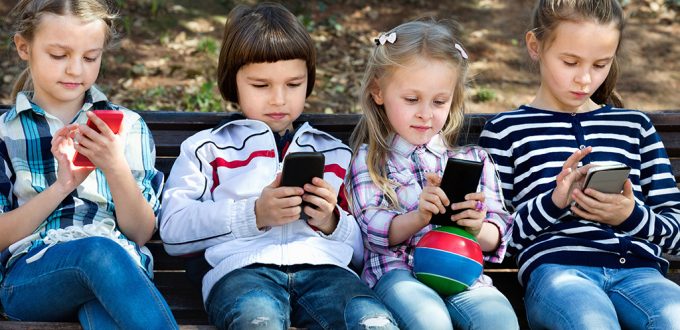
Zeeko Report Indicates Widespread Use of Mobile Devices by Primary School Children
Dublin, 3rd January 2017. Zeeko an Irish-based company located at Nova UCD works to educate parents to teach their children to stay safe online. Zeeko, today, Tuesday, 3rd January, announced results of its second School Digital Trend Report. The digital trend report is based on the work carried out by Zeeko with parents and teachers in 2016. 4,439 primary school pupils completed a questionnaire about their internet use in 29 schools between September and November 2016. In addition Zeeko asked 913 guardians of primary school pupils in 55 schools between January and June 2016 to complete a similar questionnaire. The questionnaire was developed by Zeeko for informal information gathering during its school visits, however, the trends observed give a snapshot of children’s self-reported internet use.
Key findings include the widespread use of mobile devices by primary school children, (86% have access to a smart phone, tablet or iPod), the seemingly younger ages at which children say they have open access to the internet (on average 1st Class students first went online at 4.9 years old vs 6th class students first went online at 7.6 years old) and the rise of SnapChat which has taken over Instagram as the most popular social media app with 45% of 6th class pupils now using SnapChat.
Joe Kenny, Zeeko founder and CEO said: “There is no doubt the internet is a hugely beneficial resource for young people and something they will use more than the current generation. Internet safety is all about education. Particularly for younger children it is important to raise their awareness of online risks to give them the protection and coping strategies which will help them become confident digital citizens.”
The Primary School Digital Trend Report follows on from the report issued in January 2016 which found many children in primary school said they had experienced cyberbullying. In 2015, Zeeko asked ‘Have you ever been cyberbullied, or have you experienced cyberbullying happening to people around you (in schools, your friends, your family etc.) to which 23% of 5th class children said they had. In 2017, Zeeko updated the questions and divided this question into two parts a) have you ever been cyberbullied? and b) have you ever experienced cyberbullying happening to people around you (schools, friends, family, etc)? The results for 2015 and 2016 in relation to cyberbullying are therefore not directly comparable. However, the indications are that cyberbullying is still an issue which parents need to be alive to. In 2016, the percentages of primary school children who reported being cyberbullied are still more than 10% in most classes or an average of 3 children in a typical class of 30 pupils.
- 1st class 7%
- 2nd class 13%
- 3rd class 15%
- 4th class 10%
- 5rd class 11%
- 6th class 12%
Highlights of the trends in 2016 include
1. 86% of primary school children use a mobile device (smart phone, tablet or iPod). 2. Children are starting younger to use the internet (on average 1st Class students first went online at 4.9 years old vs 6th class students first went online at 7.6 years old). 3. 66% of primary school children self-report they know more about online games and Apps than their parents, respectively. 4. 34% of primary school children have more than 2 hours screen time per day during weekdays, rising to 54% having more than 2 hours screen time per day at the weekend. 5. Cyberbullying: Percentage of primary school children who reported being cyberbullied- 1st class 7%
- 2nd class 13%
- 3rd class 15%
- 4th class 10%
- 5rd class 11%
- 6th class 12%
- Cyberbullying, 77%
- Talking to a stranger online, 58%
- Digital footprint, 40%
- Spending too long online, 40%
About Zeeko
- 2016 successful crowdfunding campaign to publish the Zeeko Internet Safety Guide. Free digital copy of the guide sent to every primary school in Ireland.
- Last school year (Sept 15 – June 16) we delivered internet safety seminars in primary schools to 25,000 pupils, 1,200 teachers and 2,300 parents. This school year (Sept 16 – June 17) on target to deliver internet safety seminars in primary schools, secondary schools and companies to 60,000 pupils, 2,900 teachers and 6,000 parents.
- Developing the i-SAFE (Internet Safety Awareness for Europe) www.i-SAFE.org Program to deliver internet safety training across Europe with our online education platform based on gaming technology.
- Commencing EU funded research into side effects of Virtual Reality Technology in the areas of education, environment behaviour, empathy or health.